
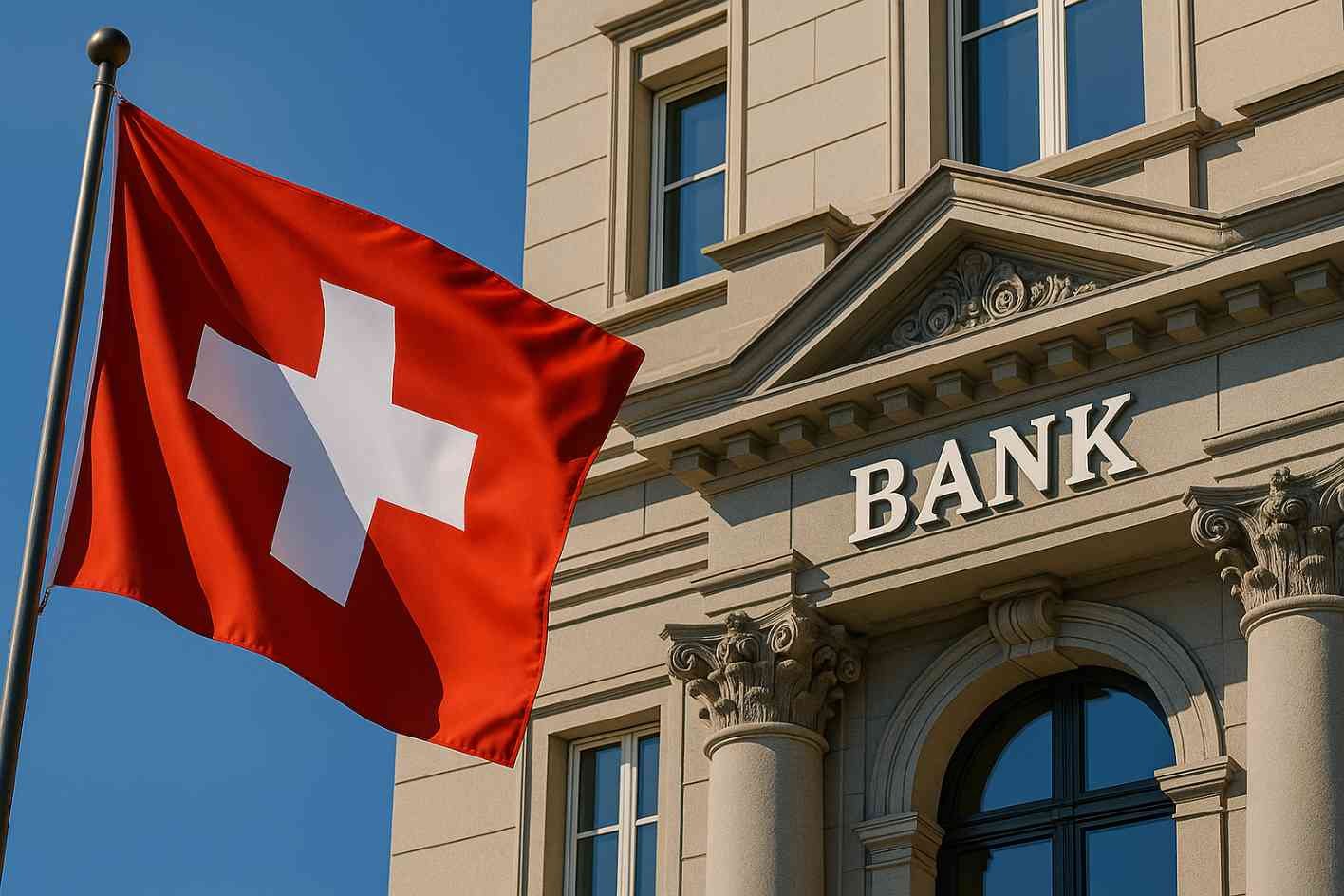
Best Swiss Bank Account for Foreigners
When I first arrived in Switzerland back in 2014, I honestly had no idea how complicated everyday life could be without a local bank account. I thought it would be a simple step: walk into a bank, open an account, and carry on. But the reality was very different. Some banks refused to open an account without a residence permit, others charged high monthly fees, and I quickly realized that choosing the wrong bank could cost me both time and money.
If you’re a newcomer, a student, or even a professional relocating to Switzerland, I know exactly how overwhelming this process feels. That’s why I created this guide so you don’t have to spend endless hours researching and stressing like I did.
In this article, I’ll share not just the facts, but also my personal journey, the advantages and disadvantages of different options, and my recommendations based on real experience. You’ll learn:
- Why is having a Swiss bank account essential?
- What factors should you consider before opening one?
- Which banks are most foreigner-friendly (and which may not be worth your time)
- Practical tips to avoid hidden fees and unnecessary headaches.
By the end, you’ll have everything you need to confidently choose the best Swiss bank account for foreigners, saving you money, avoiding mistakes, and making your life in Switzerland a lot easier.
 Why You Need a Swiss Bank Account
When I landed in Switzerland for the first time, I thought I could manage with my international bank card for a while. After all, I already had a debit card that worked abroad, so why go through the hassle of opening a new account? That assumption lasted only a few weeks.
The first issue came when I tried to pay rent. My landlord politely explained that payments must come from a Swiss account. Then came health insurance again, the same problem. Even small daily things like buying a mobile subscription or receiving my university stipend became complicated without a local IBAN. I quickly learned that living in Switzerland without a Swiss bank account is possible, but it makes life unnecessarily stressful and expensive.
Here are the main reasons you should open one:
- Paying Rent & Bills: Most landlords and utility providers only accept payments from Swiss banks.
- Receiving Salary or Stipend: Employers and universities usually require a local account.
- Health Insurance: Premiums are typically paid monthly, and most companies insist on local transfers.
- Daily Life: From mobile data plans to public transport, many systems are built for local banking.
- Saving on Fees: International withdrawals and transfers from foreign banks can eat up a lot of money.
My honest advice: don’t wait. Open a Swiss account as soon as you can. It will save you stress, time, and money and it’s the first real step to feeling settled here.
What to Look for in a Swiss Bank Account
When I first started researching banks in Switzerland, I felt overwhelmed. Each bank seemed to offer something different: one had lower fees, another had better apps, and yet another seemed easier for foreigners. I wasted hours trying to compare them all without really knowing what mattered most. Looking back, I wish someone had told me exactly what to focus on, so let me do that for you.
Here are the key factors to consider before choosing your Swiss bank account:
1. Ease of Opening
Not all banks are equally foreigner-friendly. Some require a residence permit and Swiss address, while others (like PostFinance) are more flexible. If you’re new and still waiting for paperwork, start with a bank that’s known to accept foreigners more easily.
2. Account Fees
Monthly fees in Switzerland can range from CHF 0 to CHF 15. While CHF 10 might not sound like much, it quickly adds up. Students and young people often get discounted or even free accounts! always ask for these packages.
3. Online & Mobile Banking
I cannot stress this enough: a good mobile app will make your life so much easier. When I opened my first account, I underestimated this until I had to pay multiple bills manually at a post office. Digital-first banks like Neon really shine here.
4. International Transfers
If you plan to send money abroad (or receive funds), compare transfer fees carefully. Traditional banks can be expensive. I learned this the hard way when I lost CHF 50 on my first international transfer. Now, I always pair my Swiss account with Wise or Revolut for cheaper transfers.
5. Customer Support & Language
As a foreigner, being able to speak with bank staff in English (or your preferred language) is a big advantage. Some banks provide English support more consistently than others.
My recommendation: choose a bank that balances affordability with convenience. If you’re a student, go for the cheapest option with a good app. If you’re working, invest in a bank with reliable service and support. The perfect bank depends on your situation, but focusing on these five factors will save you stress.
 Best Banks for Foreigners in Switzerland
Choosing the right bank in Switzerland is not just about opening an account! It’s about making your daily life easier, avoiding unnecessary fees, and finding a service that actually supports you as a foreigner. I’ve personally tested and researched many banks since I arrived in 2014, and here’s my honest breakdown of the best options.
1. PostFinance – Most Foreigner-Friendly
When I first struggled to open an account, PostFinance came to the rescue. Unlike some of the “big name” banks, they were more flexible with documents and willing to accept me as a newcomer.
Pros:
- Easier for foreigners to open accounts (passport + proof of address often enough).
- Clear fee structure: around CHF 5/month.
- Excellent online banking with English support.
- Widely trusted and reliable across Switzerland.
Cons:
- Not the cheapest option for students (some digital banks are cheaper).
- Fewer premium services for professionals compared to UBS.
Best for: Students, newcomers, or anyone who wants a safe and straightforward choice.
My take: This was my first reliable Swiss account, and it saved me from endless headaches.
2. UBS – Professional & Globally Trusted
UBS is Switzerland’s largest bank and carries a strong international reputation. When I first considered it, I liked how professional the process felt. However, the fees were higher than I expected as a student.
Pros:
- Internationally recognized (great for expats working in global companies).
- Professional English-speaking advisors in most branches.
- A wide range of financial services beyond just basic accounts.
Cons:
- Monthly fees are between CHF 10–15 unless you meet certain balance requirements.
- A bit bureaucratic for students or newcomers with limited paperwork.
Best for: Professionals, expats in multinational firms, or anyone needing global banking services.
My take: Reliable, but unless you’re earning a good salary, the monthly fees can feel heavy.
3. Credit Suisse – Legacy Option
Credit Suisse was once a top choice for expats but has now merged into UBS. Many existing accounts are still active, and some branches still offer services under the old structure.
Pros:
- Historically foreigner-friendly.
- Good digital banking tools.
Cons:
- Transition to UBS means less stability.
- Fees similar to UBS, with fewer advantages now.
Best for: Existing account holders; less recommended for newcomers today.
4. Neon – Best Digital Bank
When I discovered Neon, it honestly felt like a breath of fresh air. No complicated paperwork, no hidden fees, and everything handled directly from an app.
Pros:
- Free account with no monthly fees.
- Simple and modern mobile app (great for daily life).
- Transparent pricing for card payments abroad.
Cons:
- No physical branches, everything is online.
- Limited extra services (like mortgages or investment accounts).
Best for: Students, young professionals, or digital-savvy expats who want a simple and cheap solution.
My take: I still use Neon alongside my traditional bank. It’s perfect for everyday payments without the monthly costs.
5. Kantonal Banks – Local & Reliable
Each Swiss canton has its own bank (e.g., Zürcher Kantonalbank). They are often stable, trustworthy, and sometimes cheaper for locals.
Pros:
- Strong local reputation and ties to the community.
- Often lower fees compared to big banks.
- Some provide student discounts.
Cons:
- Less foreigner-friendly unless you live long-term in the canton.
- Services may be more focused on locals.
Best for: Long-term residents who want a stable, local relationship with their bank.
6. Migros Bank & Raiffeisen – Affordable Alternatives
Both Migros Bank and Raiffeisen are more affordable than the big names and have a strong presence in Switzerland.
Pros:
- Lower monthly fees (CHF 3–5).
- Good mix of traditional services and online banking.
- English support is available in larger cities.
Cons:
- Less convenient outside main cities.
- Not always the first choice for newcomers without paperwork.
Best for: Residents looking for cheaper alternatives to UBS/PostFinance.
7. Revolut & Wise – Not Swiss, But Useful
Technically not Swiss banks, but many expats (including me) use them alongside a Swiss account. They’re excellent for international transfers and managing money across currencies.
Pros:
- Low-cost international transfers.
- Great apps for managing multiple currencies.
- Fast setup (no paperwork compared to Swiss banks).
Cons:
- Not a replacement for a Swiss account (landlords/employers won’t accept).
- Limited for official transactions in Switzerland.
Best for: Supplementing your main Swiss account to save on foreign transfer fees.
My take: I use Wise for sending money home, and it’s far cheaper than UBS or PostFinance.
8. Zürcher Kantonalbank (ZKB) – Strong Local Player
Although I already mentioned cantonal banks in general, ZKB (Zurich’s cantonal bank) deserves its own mention. It’s one of the largest cantonal banks and is very popular among expats living in Zurich.
Pros:
- Trusted and stable, backed by the Canton of Zurich.
- Wide branch network across Zurich.
- Decent digital banking services.
- Student accounts are often free of charge.
Cons:
- Generally requires residence in Zurich.
- Not the easiest option for short-term foreigners.
Best for: Students and long-term residents in Zurich.
My take: When I studied in Zurich, many of my friends used ZKB because of the student perks and local reliability.
9. Banque Cantonale de Genève (BCGE) – Ideal for Expats in Geneva
If you’re moving to Geneva, BCGE is often the go-to choice. It has a strong reputation locally and is considered expat-friendly.
Pros:
- Foreigner-friendly in an international city like Geneva.
- Multilingual staff (French, English, and more).
- Strong customer service compared to some national banks.
Cons:
- Limited availability outside Geneva.
- Slightly higher fees than digital alternatives.
Best for: Expats working in Geneva or nearby.
My take: Geneva has a big international community, and BCGE knows how to make foreigners feel welcome, a huge plus when you’re new.
10. Basler Kantonalbank (BKB) – Regional but Reliable
If you’re in Basel, BKB is a good choice. Like other cantonal banks, it offers solid services and a strong local reputation.
Pros:
- Backed by the Canton of Basel-Stadt.
- Focus on stability and community trust.
- Lower fees for youth and students.
Cons:
- Less useful if you move out of Basel long-term.
- Not as modern as digital-first banks.
Best for: Foreigners and students planning to stay in Basel.
My take: Basel is home to many international companies, and BKB has adapted well to serve foreigners. It’s worth considering if you plan to live in this region.
My Recommendation
If you’re new to Switzerland and just want to get settled quickly, start with PostFinance. It’s easy, reliable, and recognized everywhere. Then, consider adding Neon for daily payments with no fees. If you’re a professional earning well, UBS might make sense for the international support and services.
The key is to choose one bank that gives you stability and one that saves you money. That way, you get the best of both worlds.
Fees, Costs & Money-Saving Tips
When I opened my first Swiss bank account, I didn’t think much about monthly fees. “It’s just CHF 5 or 10,” I told myself. But by the end of the year, I realised I had spent more than CHF 120 just on account maintenance money I could have saved as a student. That’s why understanding the true costs of Swiss banking is so important.
Common Fees to Expect
- Monthly Account Fees: Range from CHF 0 (Neon) to CHF 15 (UBS).
- ATM Withdrawals: Free at your own bank’s ATMs, but CHF 2–5 at others.
- Debit/Credit Card Fees: Some banks charge annual fees for cards.
- International Transfers: Can cost CHF 10–25 per transfer in traditional banks.
- Currency Conversion Fees: Hidden charges when paying in non-CHF currencies.
How to Save Money (My Personal Tips)
- Pick a Student Account: If you’re under 30 or studying, ask for student packages! Many are free.
- Use Neon for Daily Spending: Since it has no monthly fees, I use it for everyday expenses.
- Pair with Wise or Revolut: I lost CHF 50 on my first international transfer with UBS. After switching to Wise, the same transfer costs less than CHF 5.
- Withdraw Smartly: Always use your bank’s own ATMs to avoid extra fees.
- Avoid Multiple Cards: Stick to one debit and one credit card to reduce annual charges.
My advice: Combine one traditional Swiss bank (like PostFinance) for stability with a digital bank (like Neon) to cut costs. It’s the best balance between reliability and savings.
 Final Tips & Mistakes to Avoid
When I first navigated Swiss banking, I made my fair share of mistakes, and I’ve seen countless newcomers repeat the same ones. The good news is that with the right guidance, you can avoid stress, wasted money, and frustration. Here are the most important tips and pitfalls to watch out for:
1. Don’t Open the First Bank You See
I made this mistake myself. UBS seemed like the obvious choice because it’s the biggest Swiss bank. But I didn’t consider the fees or the strict documentation requirements. Always compare fees, services, and accessibility before deciding.
2. Overlook Student or Young Adult Packages
Many newcomers forget that banks like PostFinance, Neon, or UBS offer free or discounted accounts for students and young professionals. Not asking for these can mean unnecessary monthly charges.
3. Ignore Online & Mobile Banking
At first, I thought a physical branch was enough. Then I had to pay multiple bills manually and spend hours at the post office. A good mobile app is a lifesaver from paying rent to topping up your mobile! It makes daily life smooth and stress-free.
4. Forget International Transfer Fees
Swiss banks are notorious for high fees on cross-border transfers. My first mistake cost me CHF 50 unnecessarily. Tools like Wise or Revolut can save significant money when sending or receiving funds internationally.
5. Not Planning for the Future
Some newcomers open an account without thinking long-term. Do you want a bank for basic expenses, international transactions, or investment opportunities? Planning ahead helps you choose the account that suits your lifestyle, not just your first few months in Switzerland.
6. Keep All Documentation Ready
Missing documents can lead to delays or account rejections. Always have your passport, residence permit, proof of address, and employment/student letter ready. It saves you frustration and time.
My Personal Advice
If I could advise my past self, I’d say:
Start with a flexible, foreign-friendly bank like PostFinance. Pair it with a digital account like Neon for daily spending. Always check fees, keep your documents ready, and never underestimate the importance of a good mobile app.
By following these tips, you’ll avoid the mistakes that I and many newcomers have made. Opening a Swiss bank account will feel less like a hurdle and more like a step toward settling comfortably and confidently in your new life. Hopefully, you now understand which are the best banks in Switzerland and which one is perfect for you. Don't forget to comment if you have any questions.

Moving to Switzerland | Ultimate Expat Guide & Tips
I still remember moving to Switzerland in 2014, won’t lie, I was totally unprepared. I jumped into it with excitement in my heart, but also a lot of unanswered questions. Where would I live? How do I open a bank account? What should health insurance look like? Even the banal stuff, like taking the train or grocery shopping, seemed trickier than I thought.
Early on, I discovered that relocating to Switzerland is a dream like no other, and a challenge to boot. Sure, on the one hand, the country is gorgeous, peaceful and perfect for quality of life. On the flip side, strict regulations, high cost of living, and piles of paperwork can make finding work daunting if you’re not prepared.
That’s why I wrote this guide, to share the hard-earned lessons of my own personal journey so your own move can go more smoothly than mine did. In this article, I’ll walk you through the key steps: preparing for your arrival, searching for housing, opening a bank account, finding health insurance, using public transportation and integrating into Swiss life. Consider this advice from a friend who’s been through the ups and downs.
 Why Moving to Switzerland is Exciting & Challenging
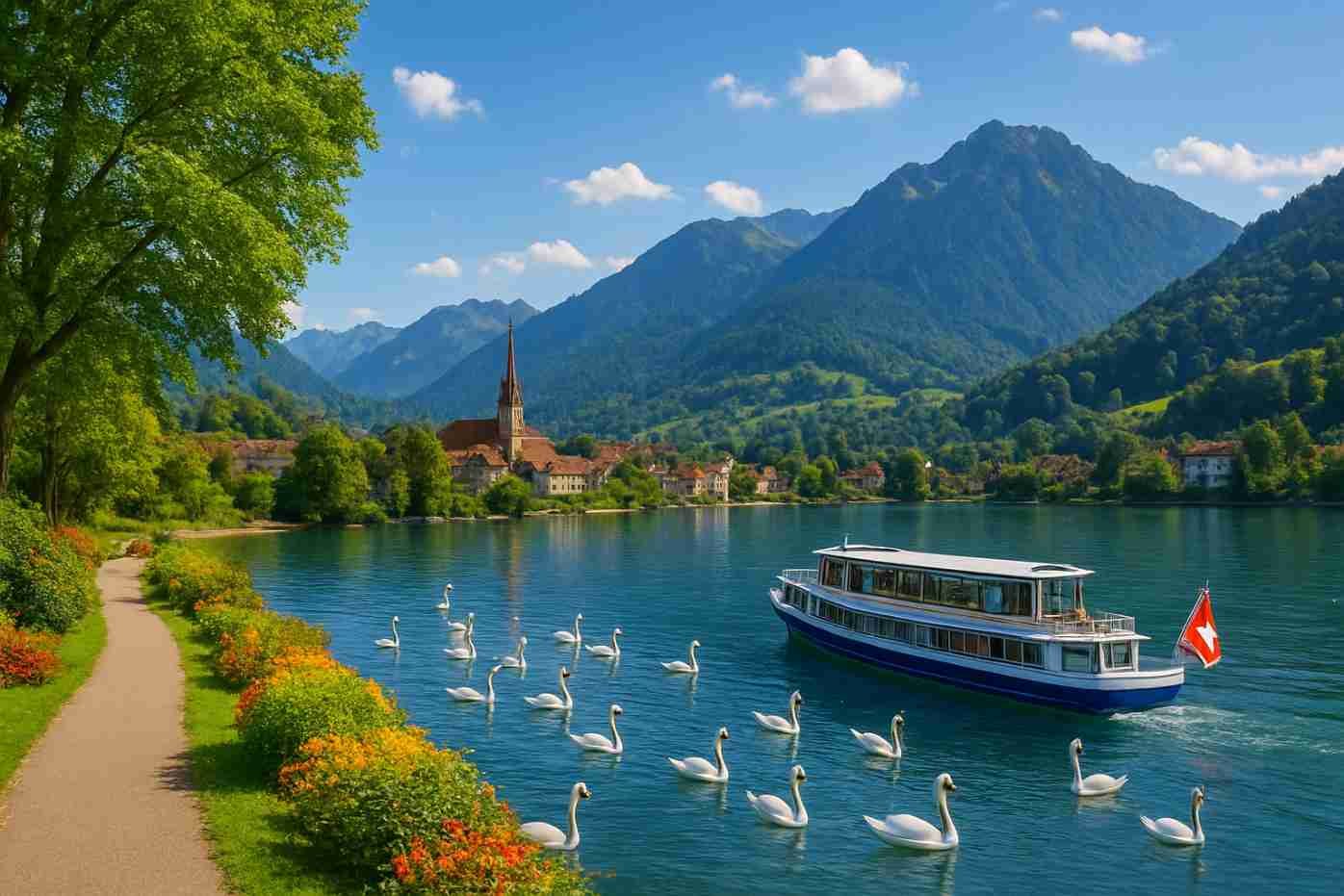
Switzerland is like living in a postcard. Snow-dappled mountains, crystal-clear lakes, trains that run on time, and some of the world’s safest cities, it’s almost surreal when you first arrive. The thrill of beginning life anew here is something I will always remember. Everything seemed fresh and clean and full of possibility.
But let’s face it it’s not all wine and roses. Switzerland has its own system of behaviour and culture to learn, which can be disconcerting at first. Housing is highly competitive, there is a lot of paperwork about residence permits and health insurance, and the cost of living can strike you as a reality slap if you are not prepared. When I first arrived, I didn’t realise how much planning and organizing there would be for me.
But the great thing about Switzerland is that once you get through those bumps, life here feels very fruitful. You receive world-class healthcare, fantastic public services and a way of life that marries work and nature perfectly. My advice? Show up ready for anything, smile and take both the good and bad. They’re all pieces of building your new life here.
Preparing Before Arrival
In retrospect, and from the perspective of my own move, I wish I had done some more planning before arriving in Switzerland. It was stressful in the first few weeks because I was unsure what documents and steps I had to take prior to. That’s why I always say to newcomers: half of success is preparation.
Begin with the fundamentals of your visa or residency permit. According to your nationality, you will require a student visa, work visa, family reunification permit, etc. Ensure your passport has at least six months’ validity and gather all supporting documents: birth certificates, educational or professional documents and evidence of financial wherewithal. The Swiss are known for their attention to detail, so not even one paper can be forgotten, which could mean an upset.
Second, consider housing in advance of arrival. Apartments are very competitive here, and it’s not uncommon to apply for 10 or 15 apartments and only get one. If nothing permanent is available yet, book something temporary (you can move into serviced apartments or Airbnb for your first month).
Budgeting is also crucial. Switzerland is expensive, and you’ll have to pay deposits, first rent, insurance and your daily expenses quickly. I discovered the hard way that it causes the rest of the trip to be more stressful.
My tip? Do a simple checklist: visa, housing possibilities, information about insurance and a sober budget. Believe me, the planning you do now will spare you lots of headaches when you get there.
 Finding Housing in Switzerland
If I had to name the most stressful part of moving to Switzerland, it would be finding housing. When I first arrived, I thought it would be a simple search online, apply, and move in. But the reality? Apartments here are in high demand, and competition is fierce. I remember applying for multiple flats and being rejected more times than I’d like to admit. It felt discouraging at first.
Here’s what I learned: landlords in Switzerland usually expect a complete application with proof of income (or student status), a residence permit (or at least confirmation of application), and sometimes even a personal recommendation. Without these, your chances drop quickly.
The best platforms to search are Homegate, ImmoScout24, and Comparis. For students or short stays, university housing services or temporary options like Airbnb are lifesavers. If you’re new, don’t be afraid to start with a short-term rental while you look for something long-term.
Another challenge is the deposit, usually three months’ rent. Make sure you plan for this financially.
My advice? Be quick, organised, and persistent. Always bring a full application when you visit an apartment. And don’t get discouraged if you don’t succeed right away, persistence pays off. Once you finally get your own place, it feels like a huge victory.
 Banking & Finances
One of the early hurdles I encountered after relocating was how to open a Swiss bank account. Without it, I wasn’t able to rent properly, wasn’t able to establish health insurance and couldn’t even get a mobile phone contract. The thing I found most surprising was how formal it all seemed compared to my home country.
The largest banks here are UBS, Credit Suisse, Raiffeisen and PostFinance. For beginners, PostFinance probably has the fewest hoops to jump through for foreign students and expats. To do it, you would normally need to take your passport, proof of address, residence permit (or acknowledgement of application), and sometimes proof of income or university enrollment.
One word of advice: Swiss banking fees can be surprisingly high. Carefully review monthly fees, ATM withdrawal costs and international transfer fees. Online banks like Neon or Revolut can be good options for saving money on daily banking and international transfers.
You would want to at least set up your account as soon as possible after arriving. Having a local account makes your financial life easier, it gives you credibility (landlords and insurance companies also like to see a local account), and it provides peace of mind that your money is being safely handled in Switzerland.
Health Insurance & Healthcare
If there’s one thing I wish I had fully understood before moving, it’s health insurance in Switzerland. Unlike some countries where insurance is optional, here it’s mandatory for everyone, students, workers, and even dependents, and you need to sign up within three months of arrival. I didn’t realise how strict this rule was until I received an official reminder letter in my mailbox!
The system works like this: you choose a basic health insurance plan (called LAMal) from a private provider, but the coverage is regulated by the government. This means that whether you choose Helsana, CSS, or SWICA, the basic coverage is essentially the same. What changes are the monthly premiums, deductible (franchise), and customer service?
The costs can be high, so it’s worth comparing carefully. I remember spending weeks researching providers, only to realise later that online comparison tools like Comparis make the process much easier.
On the positive side, once you’re insured, you get access to excellent healthcare doctors, hospitals, and pharmacies, here are world-class. My advice? Don’t delay choosing your plan. Start early, compare providers, and pick what truly fits your budget and lifestyle.
 Transportation & Daily Life
One of the first things I was awed by in Switzerland was the public transport system! Trains are on time almost to the minute, trams and buses are clean, and everything is so well connected you hardly need a car. I remember my first trip on the train along Lake Geneva, I saw these mountain ranges, vineyards, and, God, it made me just realise how blessed I am to live here.
If you will stay long term, it may make sense to look into a Swiss Travelcard or Halb-Tax (half-fare card). These passes will save you a ton of money, particularly if you commute or like to spend weekends away. Cycling is also big, and most cities have good cycle paths.
Every day life here is orderly but different from much of what foreigners are accustomed to. For instance, most stores close early in the evening, or on Sundays\' something that really amazed me in my initial weeks! It takes a bit of practice to get the hang of planning groceries and errands around Swiss schedules, but it’ll be second nature before you know it.
My tip? Settle into the pace of Swiss living. On weekends, you can enjoy natural surroundings, take pressure off by catching the train, and experience a balance between rushing around and slowing down in the day-to-day here.
Cultural Adaptation & Social Life
Adjusting to Swiss culture was one of the most rewarding yet challenging parts of my journey. At first, I felt a bit out of place. People seemed reserved, and I wondered how I would ever make friends. I quickly realised that while the Swiss may not open up immediately, once they do, their friendships are genuine and long-lasting.
Punctuality is a big deal here. If you’re invited to dinner at 7:00, arriving at 7:10 can be seen as rude. I learned this the hard way in my early days, and since then, I’ve always made an effort to be on time. Respecting local customs, like greeting everyone in a room with a polite Grüezi or Bonjour, also goes a long way in building connections.
For social life, I found that joining local clubs, sports groups, or expat communities made the biggest difference. Whether it was hiking groups in the Alps or casual coffee meetups with other newcomers, these helped me feel at home faster.
My advice? Be patient with yourself, stay open-minded, and don’t be afraid to take the first step in conversations. Cultural adaptation takes time, but it also enriches your experience in ways you’ll treasure forever.
Final Thoughts & Encouragement
Looking back on my journey to moving to Switzerland, I can say with certainty that doing so was one of the best decisions of my life, even if it didn’t feel so at the time. From the frustration of housing applications to getting lost in my first tram ride, all the bumps have taught me patience and perseverance. And with each little win, I started to feel that little bit more at home.
This is not always easy if you are going to Switzerland. There’s going to be paperwork, navigating cultural differences and perhaps even some bouts of loneliness. But the payoff is incredible too: breathtaking scenery, a safe, ordered society, and the opportunity to establish a good life in a Nation that highly values both tradition and innovation.
If you’re getting ready for this journey, my advice is simple: Be patient, stay curious, and come with an open heart. And don’t expect everything to fic into place all at once, but you will find your rhythm step by step. It’s the kind of thing that happens when in Switzerland. Someday you will look back and realise it’s not where you live but where you belong.
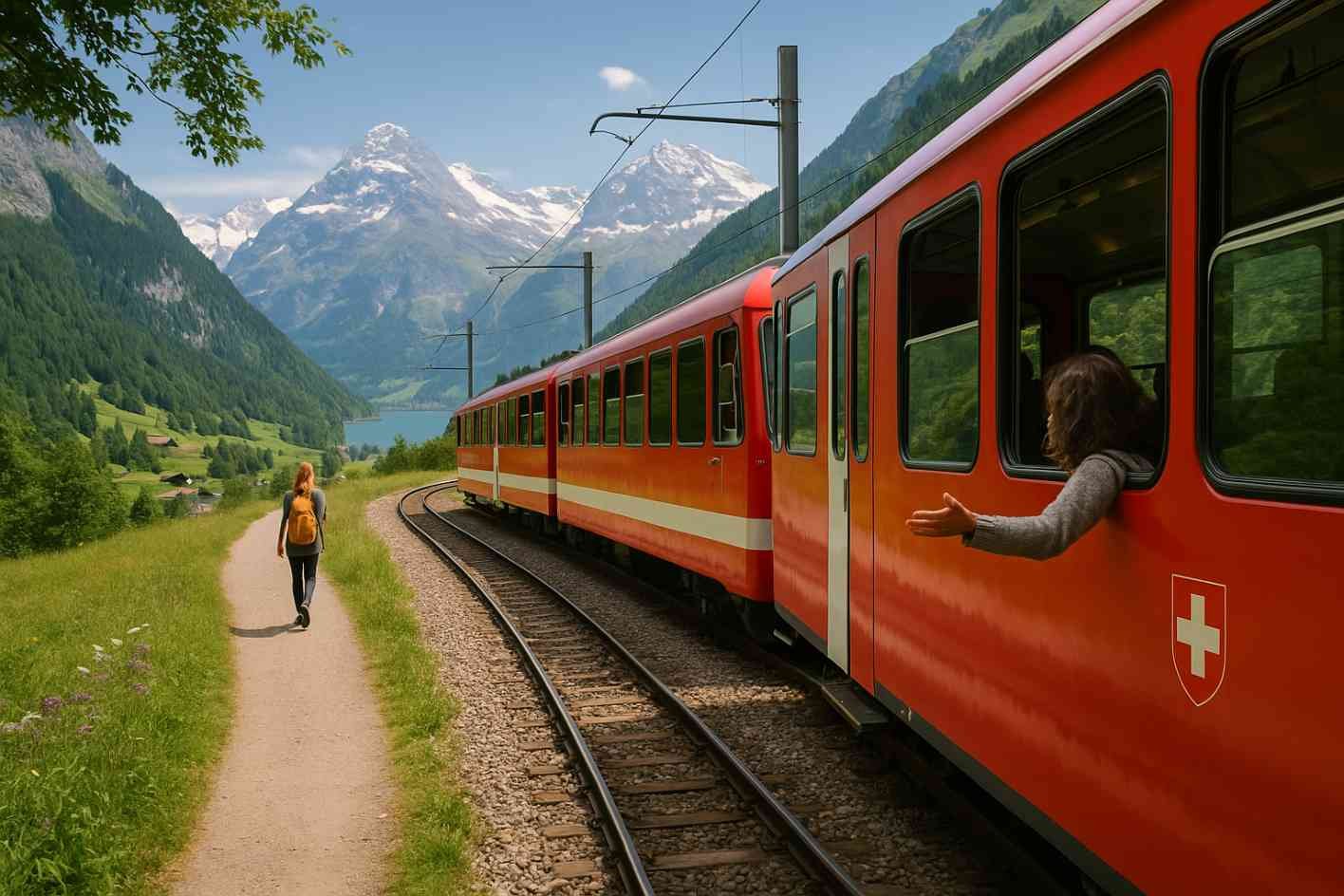
Public Transportation in Switzerland | Guide for Foreigners
When I initially arrived in Switzerland, I had no idea how much public transportation would shape my everyday life. Coming from a country where owning a car felt almost essential, I quickly realised that here in Switzerland, trains, buses, and trams are not just options! They are the backbone of daily life.
I still remember my very first train ride from Zurich Airport. Everything felt new and a little confusing. Which platform? Which ticket? Am I allowed to sit here? Within minutes, the train left on time (to the exact second!) and I found myself gliding past snow-covered mountains and beautiful lakes. It was breathtaking, but also slightly stressful because I worried if I had bought the correct ticket. In fact, I made mistakes in those early weeks: once, I didn’t validate my ticket correctly and ended up paying a fine.
That’s why I want to share this guide with you. Switzerland’s transport system is world-class: punctual, safe, and sustainable. But as a newcomer or visitor, it can feel overwhelming at first. There are countless passes, rules, and small details that can either make your journey smooth or stressful.
In this article, I’ll walk you through everything I’ve learned over the years: the advantages of relying on public transport, the few disadvantages to keep in mind, and practical tips that will save you time & money, and headaches. Think of it as advice from a local friend who has already gone through the trial and error, so your journey can be much easier than mine.
 Why Swiss Public Transport is Famous Worldwide
One of the first things I noticed after moving to Switzerland was how people here rely on trains, trams, and buses with complete confidence. And soon I understood why: Swiss public transport has a global reputation for being one of the most efficient systems in the world.
The biggest reason is punctuality. Trains here are so precise that you can almost set your watch by them. If the schedule says 07:32, the train will depart at exactly 07:32. For a newcomer like me, this was both impressive and a little intimidating. Back home, I was used to delays being “normal.” Here, delays are the exception.
Another reason is the coverage. No matter where you are in a busy city like Zurich or in a small mountain village, public transport connects you. I’ve taken buses to remote hiking trails, boats across serene lakes, and even mountain trains that feel like an adventure on their own. For foreigners, this means you don’t need to own a car to explore Switzerland fully.
Of course, there are a few downsides. Swiss transport is not cheap. Tickets can feel expensive, especially if you’re travelling frequently. But on the other hand, the comfort, safety, and sustainability make up for it. Trains are clean, seats are comfortable, and the view from the window often feels like a postcard.
So why is Swiss public transport famous? Because it’s not just about getting from A to B, it’s about reliability, accessibility, and an experience in itself. Once you get used to it, you’ll wonder how you ever managed without it.
 Overview of the System – Trains, Buses, Trams, Boats
If there’s one thing you should know about Switzerland’s transport system, it’s that everything is connected like clockwork. The different modes trains, buses, trams, and even boats, all run on one synchronised timetable. That means when your train arrives in a small town, the bus or tram is usually waiting to take you to your next stop. It’s like a giant puzzle that always fits together.
Trains (SBB & regional trains):
The backbone of the system is the train network, operated mainly by SBB (Swiss Federal Railways) and regional companies. Trains link all the major cities Zurich, Geneva, Basel, Bern, Lausanne and also smaller towns and mountain villages. Personally, I’ve always preferred taking trains over cars, not only because they are faster but also because the views from the window are simply unforgettable.
Buses:
Where trains can’t go, buses fill the gap. Yellow PostBuses (PostAuto) are iconic in Switzerland and will take you to places deep in the mountains or rural areas. I still remember my first PostBus ride through narrow Alpine roads, a bit scary at first, but also magical because the driver handled it like a pro.
Trams:
In cities like Zurich, Basel, and Geneva, trams are the most convenient way to move around. They’re frequent, easy to use, and usually cover every corner of the city. For me, the tram system in Zurich felt like a lifeline during my early days as a student.
Boats:
And then there are the boats, yes, public ferries are part of the official system! Cruising across Lake Geneva or Lake Lucerne on a scheduled boat is both practical and scenic. Sometimes I used boats not just for transport, but as a mini sightseeing trip.
Altogether, the system is designed so seamlessly that you don’t need to think twice. One ticket often covers your entire journey, no matter how many changes you make. That’s the true beauty of Swiss public transport.
 Tickets & Passes Explained Simply
If I’m honest, the ticketing system in Switzerland confused me the most when I first arrived. I still remember standing in front of the ticket machine at Zurich Airport with tired eyes, not knowing whether to buy a single ticket, a day pass, or something else entirely. Luckily, over time, I learned that the Swiss system is actually very logical once you understand the basics.
Single Tickets & Day Passes
If you’re making just one trip let’s say from Zurich to Bern a single ticket is enough. These tickets are valid for a set route and time. But if you’re planning to travel around a city or region multiple times in one day, a day pass can be much cheaper. For example, in Zurich, I often bought a 24-hour ticket, which let me hop on and off trams, buses, and even boats without worrying about separate tickets.
Swiss Travel Pass
For tourists, the Swiss Travel Pass is a lifesaver. With this pass, you get unlimited travel on almost all trains, buses, boats, and even free entry to many museums. When my friends visited me, I always recommended it not just because it was cost-effective, but also because it removed the stress of buying tickets each time.
Half Fare Card (Halbtax)
For residents and long-term students like me, the Half Fare Card is a must. This pass allows you to buy tickets at half price across the country. I bought mine within the first month of arriving, and honestly, it paid for itself within a few trips. It’s the card I still carry in my wallet today.
Saver Day Pass & Supersaver Tickets
Switzerland also offers Saver Day Passes if you book in advance. I once bought one for just 49 CHF and travelled the whole day across multiple cities, an amazing deal considering how expensive tickets normally are. Similarly, Supersaver Tickets give discounts for specific routes and times.
Zoning System
In cities, tickets are based on zones rather than distance. At first, I found this tricky. I once accidentally bought the wrong zone ticket in Zurich and had to pay a fine. My advice? Always check which zones you need before you travel.
Mobile Apps & Convenience
Today, things are much easier thanks to apps like SBB Mobile. I rarely use ticket machines anymore; I just buy tickets on my phone, which saves time and avoids mistakes.
In short: Switzerland offers flexibility for every type of traveler whether you’re here for a few days or building a new life. The trick is to pick the right pass for your situation so you save money while enjoying the convenience of this world-class system.
 My Personal Journey & Lessons Learned
When I think back to my early days in Switzerland, public transport was both a blessing and a challenge. On one hand, I was amazed at how easily I could travel across the country without owning a car. On the other hand, I felt like a child learning everything from scratch, which ticket to buy, how to change trains, or even where to sit.
One of my funniest mistakes was during my first month in Zurich. I bought a tram ticket but didn’t realise it was valid for multiple zones. I thought it was only for one trip, so I kept buying extra tickets every time I boarded. At the end of the week, I had spent double what I needed! That was my first big lesson: understanding the system saves you both money and stress.
I also learned that Swiss transport isn’t just about efficiency, it’s about lifestyle. Students, families, businesspeople, and even elderly residents rely on it daily. Unlike in many countries, not owning a car in Switzerland doesn’t make life harder; in fact, it makes it easier. For me, carrying a Half Fare Card quickly became second nature. Today, I can’t imagine living here without it.
Of course, I’ve had my fair share of small struggles, missing connections because I underestimated how precise the schedules were, or getting slightly lost in a rural area because I didn’t check the bus timings carefully. But every mistake became a small lesson that made me more confident.
What I cherish most is the freedom public transport has given me. I’ve explored mountain villages I never thought I’d reach, crossed stunning lakes, and even turned a simple commute into a chance to watch the sunset over the Alps. My advice? Don’t just treat transport as a necessity embrace it as part of your Swiss experience.
Practical Tips for Foreigners (Apps, Mistakes to Avoid)
When I first started navigating Switzerland’s public transport, I quickly realised that a few small mistakes could make the journey stressful. Over the years, I’ve learned practical strategies that make commuting smooth, enjoyable, and even fun. Here’s what I recommend for anyone new to Switzerland:
- Use Mobile Apps
The most useful tool I discovered is the SBB Mobile app. With it, you can:
- Check real-time train, bus, and tram schedules
- Buy tickets instantly without standing in line
- Plan routes that combine trains, buses, trams, and even boats
I used to rely on paper timetables, which often left me running to catch connections. Once I switched to the app, my stress levels dropped drastically.
- Understand Zones and Ticket Types
Many newcomers make the mistake of buying the wrong zone ticket or misunderstanding passes. I remember buying a single-zone ticket for multiple stops in Zurich. I got a fine that day. Lesson learned: always double-check which zones you’ll travel through, and if possible, consider a day pass for unlimited travel within city zones. - Validate Your Ticket
Some buses or regional trains require you to validate your ticket before boarding. Forgetting this can cost you a fine. I learned this the hard way during a PostBus ride in the mountains! A small oversight cost me 40 CHF. - Plan for Transfers
Switzerland’s system is precise, but tight transfers can be tricky for newcomers. Allow at least 5–10 minutes for switching between trains or buses, especially if you’re carrying luggage. - Keep Your Half-Fare Card Handy
If you’re a resident or long-term student, your Half Fare Card is invaluable. Always carry it! You never know when it will save you a lot of money on spontaneous trips. - Don’t Panic in Rural Areas
I once hesitated to board a PostBus in a remote village because the timetable seemed confusing. Swiss drivers are friendly and often speak English just ask if you’re unsure.
By following these tips, navigating Swiss public transport becomes second nature. With apps, planning, and a little local knowledge, you can travel efficiently, explore hidden gems, and even enjoy your commute as part of your Swiss adventure.
Cost & How to Save Money
One of the first questions I had when I arrived in Switzerland was: Is public transport really that expensive? The short answer is yes, it can feel pricey compared to many countries. But over time, I learned that with a few smart strategies, you can significantly reduce your costs without sacrificing convenience.
- Invest in a Half Fare Card
For residents, students, or long-term visitors, the Half Fare Card (Halbtax) is a game-changer. I bought mine during my first month, and within a few trips, it had already paid for itself. With this card, most train, bus, tram, and boat tickets cost 50% less, which adds up quickly if you travel often. - Consider Day Passes
If you plan multiple trips in a city or region in a single day, a day pass can be cheaper than buying single tickets. When my friends visited me, we often bought day passes for Zurich or Geneva, which saved both time and money. - Supersaver Tickets & Saver Day Passes
Booking in advance can lead to huge discounts. I once travelled from Zurich to Lucerne with a Supersaver ticket for just 25 CHF, instead of the regular 50 CHF. Check the SBB website or app regularly to grab these deals. - Travel Off-Peak
If your schedule is flexible, travelling outside rush hours can also save money and provide a more relaxed experience. Trains are less crowded, and you might even enjoy a better view from the window. - Combine Trips Wisely
Planning multiple trips in one journey can save both money and time. For example, using a single-day pass to explore two nearby towns is often cheaper than buying individual tickets for each trip.
In Switzerland, public transport is more than just a way to get from A to B. With the right passes and a bit of planning, it becomes affordable, stress-free, and even enjoyable allowing you to explore the country without worrying about high costs.
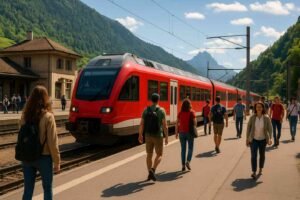 Recommendations for Tourists, Students & Expats
Switzerland’s public transport works for everyone, but each group has slightly different needs. From my personal experience, knowing what works best for your situation can save you both money and stress.
For Tourists
If you’re visiting Switzerland for a short trip, the Swiss Travel Pass is your best friend. I’ve recommended it countless times to friends and family. It allows unlimited travel on trains, buses, trams, and even boats, plus free or discounted entry to many attractions. My tip: plan your sightseeing around the transport network it’s convenient and often more scenic than driving.
For Students
Students like me benefit enormously from the Half Fare Card combined with regional student discounts. In my first year, I frequently traveled to nearby cities for weekend trips. Using the student card plus apps like SBB Mobile, I could plan every journey efficiently without overspending. Always check if your university partners with any transport programs; some offer extra savings.
For Expats & Residents
Long-term residents should consider monthly or annual passes, depending on commuting patterns. When I moved to Bern for work, I calculated that a regional monthly pass was cheaper than buying daily tickets. Also, keep your tickets and passes in a safe but handy place inspectors check randomly, and fines are steep.
General Tips for All Groups
- Always download the SBB or local transport app.
- Check timetables in advance, especially for rural or mountain routes.
- Travel light when possible; it makes transfers easier.
No matter your group, the key lesson I’ve learned is this: plan ahead, choose the right pass, and embrace the system. Switzerland’s transport network is reliable, safe, and beautiful use it to explore the country efficiently, comfortably, and affordably.
Final Thoughts + Natural Call-to-Action
Looking back at my first months in Switzerland, public transport was both a challenge and a delight. At first, I was overwhelmed by schedules, ticket types, and different modes of transport. But gradually, I discovered a system designed to make life easier, safer, and more enjoyable. Trains, buses, trams, and boats are not just ways to get from one place to another; they’re gateways to exploring the country, meeting locals, and experiencing Switzerland in a truly unique way.
From my experience, the best approach is simple: plan ahead, choose the right passes, use apps, and don’t be afraid to ask for help. Small mistakes happen, but each one teaches you something valuable, and soon navigating the system becomes second nature.
Whether you’re a tourist, student, expat, or new resident, embracing Switzerland’s public transport opens doors to places you never thought you could reach. I’ve explored mountain villages, serene lakes, and bustling cities all without owning a car. And you can do the same, with confidence and ease.
Take a moment today to explore your options, check which pass works best for you, download the SBB app, and start planning your journeys. Once you get the hang of it, Switzerland’s public transport will not just be a necessity! It will become one of the most enjoyable parts of your Swiss experience.
Health Insurance in Switzerland for Foreigners
When I first landed in Switzerland, I had absolutely no idea how the health insurance system in Switzerland for foreigners really worked. To be honest, I was overwhelmed. Everyone told me it was mandatory, but nobody explained what that actually meant. I spent weeks browsing websites in German, French, and even half-translated English guides, trying to figure out what I needed to do. I made mistakes, I lost time, and I definitely felt frustrated.
That’s why I’m writing this guide to save you from going through the same confusion. If you’re new to Switzerland or planning to move here, let me tell you one thing straight: understanding health insurance in Switzerland for foreigners is not optional! It’s essential. You only have three months after arriving to get insured! Otherwise, the authorities will assign you a provider (and believe me, that’s not usually the best or cheapest option).
Health insurance in Switzerland comes with many advantages: access to some of the best healthcare in the world, freedom to choose your provider, and peace of mind knowing you’re protected. But there are also disadvantages: it can be expensive, the system is complex, and choosing the wrong plan can cost you a lot over time.
The do’s? Register early, compare providers, and understand your deductible. The don’ts? Don’t pick an insurer just because it looks cheap, and don’t wait until the last minute.
In this article, I’ll guide you step by step, sharing not just the rules but also my personal experiences, recommendations, and the lessons I learned the hard way. By the end, you’ll know exactly how to navigate Swiss health insurance for expats with confidence.
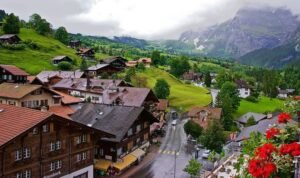 Why Health Insurance is Mandatory in Switzerland
One of the first shocks I had after arriving in Switzerland was learning that health insurance in Switzerland is mandatory. Back home, I was used to insurance being a choice, something people could take or leave depending on their situation. But in Switzerland, the rule is clear: if you live here, you must have health insurance no matter your age, health condition, or reason for staying. This applies equally to locals and to foreigners navigating the Swiss health insurance system.
At first, this felt stressful. I had only just arrived, I was still trying to figure out housing and bank accounts, and suddenly there was this urgent three-month deadline hanging over my head. I remember feeling anxious, thinking, What if I don’t manage to sort this out in time? What happens then?
Well, here’s what happens: if you don’t register within three months of your arrival, the authorities will step in and assign you an insurer. And believe me, that’s usually one of the more expensive ones, and you won’t get to choose the conditions. That’s a mistake many newcomers make: waiting too long, assuming it can be handled later. For anyone researching health insurance in Switzerland for foreigners, this is one of the most important things to understand early.
But over time, I came to see the advantages of this system. Switzerland has some of the best healthcare in the world, and mandatory health insurance in Switzerland means everyone has equal access to doctors, hospitals, and treatments without fear of being denied care. It also gives peace of mind knowing that if something happens, you’re covered.
Of course, there are disadvantages too. Premiums can be high, and unlike some countries, the government doesn’t automatically cover you. Even if you’re young and healthy, you can’t skip it.
Dos: Register as early as possible, compare providers, and ask questions if you don’t understand the system.
Do n’ts: Don’t assume your travel insurance will be enough, and don’t ignore the deadline, thinking it doesn’t apply to you.
Looking back, I’m glad Switzerland takes health insurance so seriously. At first, it felt like a burden, but later I realised it was actually a safeguard one of the best protections you can have while living here.
 The Swiss Health Insurance System Explained
When I first tried to understand how health insurance in Switzerland worked, I honestly thought I needed a degree just to read through all the rules. The language was complex, the options endless, and I kept asking myself: Why can’t this just be simple?
So let’s break it down together in a way that makes sense, the way I wish someone had explained it to me when I first arrived.
The Basics: Mandatory Insurance (LAMal/KVG)
Every resident in Switzerland must sign up for basic health insurance, known as LAMal (in French) / KVG (in German). This is the foundation. It covers:
- Doctor visits and specialists
- Hospital stays (general ward)
- Emergency treatments
- Pregnancy and maternity care
- Certain medicines
No matter which provider you choose, the coverage is almost identical because the government regulates it. The difference lies in service, models, and price.
Premiums: Monthly Payments
Instead of paying based on income (like in some countries), everyone pays a monthly premium. Prices vary by:
- Canton (region): Living in Zurich is usually more expensive than living in a rural canton.
- Age: Young adults usually pay less than older residents.
- Provider: Each insurance company sets different rates.
When I was a student, I was shocked by how high the premiums were compared to my home country. At first, I thought I’d made a mistake in the application, but no, healthcare in Switzerland is genuinely expensive.
Deductible (Franchise): Your First Bill
This was the part I misunderstood the most in the beginning. The deductible (or franchise) is the amount you pay out of your own pocket each year before the insurance kicks in.
For example:
- If you choose a low deductible (CHF 300), your monthly premium will be high, but your out-of-pocket expenses will stay low.
- If you choose a high deductible (CHF 2,500), your monthly premium will be cheaper, but you’ll pay a lot more if you actually need treatment.
My mistake: I picked a high deductible, thinking I’d save money. Then I caught the flu that winter, had multiple doctor visits, and paid nearly everything myself. It taught me to be realistic about my health needs.
Co-payments (Cost Sharing)
Even after reaching your deductible, you still share part of the cost:
- 10% of the treatment bill (called “co-pay”), up to CHF 700 per year.
- Hospital stays also charge CHF 15 per day.
It might sound small, but it adds up if you’re often at the doctor's.
Supplementary Insurance (Optional)
On top of the mandatory basic plan, you can choose supplementary insurance. This covers extras like:
- Private or semi-private hospital rooms
- Alternative medicine (acupuncture, osteopathy)
- Dental care
- Glasses or contact lenses
When I first arrived, I skipped this part because of the extra cost. Later, I added supplementary insurance for alternative medicine, and it really made a difference for me.
Advantages & Disadvantages
Advantages: High-quality care, freedom to choose providers, protection against huge bills.
Disadvantages: Expensive, complex system, and even with insurance, you still pay part of the costs.
Once you understand these basics, premiums, deductibles, co-payments, and optional coverage, the system starts to feel less intimidating. It’s not about finding the cheapest plan, but about finding the right fit for your lifestyle and health needs.
 My Personal Journey: Choosing Swiss Health Insurance
When I first landed in Switzerland in 2014, health insurance in Switzerland was honestly the last thing on my mind. I was excited about my studies, the snow-covered mountains, and the promise of a new chapter. But within just a few weeks, reality hit me: I had to register for Swiss health insurance and fast.
The problem was, I didn’t understand a single thing about the system. I remember sitting in my tiny student room, surrounded by brochures in German and French, desperately trying to translate them word by word. I felt lost. Everyone kept saying, “It’s mandatory, you only have three months,” but nobody explained how to actually choose the right plan.
At first, I did what many newcomers do: I picked what looked cheapest. A student budget doesn’t leave much room for CHF 300–400 monthly premiums. So I chose a provider with a high deductible, thinking, I’m young and healthy, I won’t need much healthcare. It felt like a clever way to save money.
That decision came back to bite me. A few months later, I got sick during winter, the kind of flu that drags on for weeks. Multiple doctor visits, blood tests, and medication later, I realised almost everything had to come out of my own pocket because I hadn’t reached my deductible. Instead of saving money, I ended up paying more than I expected and it caused unnecessary stress.
Lesson #1: Don’t just chase the cheapest premium. Think about your health realistically and plan for surprises.
Over the years, I learned to be more strategic. I started comparing health insurance providers in Switzerland every autumn, watching deadlines closely so I could switch if needed. Once, I switched to a different insurer that offered an English-speaking helpline, something small, but it made my life much easier.
Lesson #2: Don’t underestimate customer service. When you’re sick, the last thing you want is to struggle with a language barrier on the phone.
Another important step was adjusting my deductible. As a student, I thought I’d always be fine with the maximum CHF 2,500. But later, I lowered it to CHF 1,000 because I realised peace of mind mattered more than shaving off CHF 40 a month.
Lesson #3: Your needs change with time. Review your plan regularly and don’t be afraid to adjust.
Looking back, those first mistakes taught me lessons I still carry today. Health insurance in Switzerland for foreigners can feel intimidating, but once you understand the system and align it with your personal lifestyle, it stops being a burden and starts being a safety net you can rely on.
 How to Choose the Right Insurance
Choosing health insurance in Switzerland can feel like standing in front of 100 doors, not knowing which one leads to the right place. I remember the first time I compared providers, I had dozens of tabs open on my computer, each one filled with numbers, terms, and models I barely understood. It felt impossible to make the perfect choice.
But over the years, I realised something important: there isn’t one “perfect” insurance. There’s only the plan that best fits your life, your health, and your budget. Let me walk you through the exact process I now follow every year when reviewing my health insurance.
Step 1: Understand Your Own Health Needs
Before you look at numbers, think about your personal situation:
- Do you visit doctors often, or just once in a while?
- Do you need regular medication?
- Do you have children or dependents?
- Do you prefer the flexibility of choosing any doctor, or are you okay with restrictions if it saves money?
When I was a student, I barely saw doctors, so I thought a high deductible would save me money. But after a tough flu season, I realized my assumption was wrong. Be realistic, not optimistic.
Step 2: Compare Providers Online
Websites like Comparis.ch or Priminfo are lifesavers. You simply enter your canton, age, and preferred deductible, and they show you a list of insurers with their monthly premiums.
Personal tip: Don’t just look at price. I once chose the cheapest option and regretted it because customer service was almost impossible to reach when I had questions. Now, I always read reviews and ask other expats about their experiences.
Step 3: Choose the Right Model
This is where many newcomers get confused. Here are the main models:
- Standard Model: Freedom to choose any doctor. Most flexible, but also the most expensive.
- Family Doctor Model: You always see your chosen family doctor first. If needed, they refer you to a specialist. Cheaper premiums.
- HMO Model: You visit a specific group practice (HMO center). Lower premiums, but less flexibility.
- Telmed Model: You must call a medical hotline before seeing a doctor. They guide you to the next step. Affordable but requires discipline.
I personally switched to the Family Doctor model and found it worked perfectly for me. It gave me a familiar contact point while still keeping costs reasonable.
Step 4: Decide on Your Deductible (Franchise)
This is the hardest decision for most people. As explained earlier:
- CHF 300 = High monthly premium, low out-of-pocket costs.
- CHF 2,500 = Low monthly premium, high out-of-pocket costs.
When I was younger, I chose CHF 2,500 and regretted it. Later, I lowered mine to CHF 1,000; it struck the right balance between affordability and peace of mind.
Rule of thumb:
- If you’re young, healthy, and rarely see a doctor → consider a higher deductible.
- If you have ongoing medical needs or want security → go for a lower deductible.
Step 5: Look Beyond the Price
- Customer Service: Does the insurer offer English support? How easy is it to submit claims?
- Reimbursements: Some insurers pay bills directly, others require you to pay first and then get reimbursed.
- Digital Tools: Many insurers now have apps for submitting bills and managing documents. These save so much time!
I once had an insurer that required me to send physical copies of invoices by post. It was a nightmare compared to the ease of scanning and uploading with an app.
Step 6: Watch the Deadlines
Health insurance contracts in Switzerland usually renew annually. To switch providers, you must cancel by the end of November for changes to take effect on January 1st. Miss the deadline, and you’re locked in for another year.
I learned this the hard way my first year. I missed the cancellation date and was stuck with a plan that didn’t suit me anymore. Now, I set a reminder every October to review my options.
Do’s & Don’ts When Choosing Insurance
Do:
- Register within 3 months of arriving.
- Compare providers yearly.
- Choose a deductible based on reality, not hope.
- Read reviews and ask for recommendations.
Don’t:
- Pick the cheapest plan blindly.
- Ignore the model restrictions (HMO/Telmed can be limiting).
- Miss the November deadline.
My Final Recommendation
If I had to sum it up: health insurance in Switzerland is not about finding the cheapest plan, it’s about finding the right balance for your life. Be honest with yourself about your health, don’t ignore the fine print, and remember that peace of mind is worth more than saving CHF 20 a month.
Once you understand the system, choosing insurance becomes less stressful and more like tailoring a suit that fits you perfectly.
 Common Mistakes Foreigners Make
When I think back to my first months in Switzerland, I can still remember the frustration of not knowing whether I was handling health insurance in Switzerland correctly. And I wasn’t alone—over the years, I’ve met many newcomers who went through the same confusion. The system can feel overwhelming at first, but most mistakes can be avoided if you know what to watch out for.
Mistake 1: Waiting Too Long to Register
Many foreigners assume they can “sort it out later” or that travel insurance will cover them for the first few months. But the truth is, you only have three months from your official arrival date. Miss that deadline, and the authorities will assign you a provider, usually a costly one, where you don’t get to choose the conditions.
Tip: Start comparing health insurers as soon as you arrive. Even if you don’t commit right away, at least have a plan ready so you don’t run out of time.
Mistake 2: Choosing Based Only on Price
I fell into this trap myself. When you’re on a student or expat budget, the cheapest premium looks tempting. But the lowest-cost option often comes with strict limitations or poor service. I once spent weeks chasing reimbursement because I hadn’t realised the insurer had such slow processes.
Lesson learned: Price matters, but value matters more. Look at customer service, available languages, and flexibility in addition to monthly costs.
Mistake 3: Misunderstanding Deductibles (Franchise)
The franchise system in Switzerland is confusing for many newcomers. Some people think that once they pay the monthly premium, everything else is covered which isn’t true. I picked the highest deductible at first, thinking I was being smart, but ended up paying most of my medical bills myself that year.
Advice: Calculate realistically. If you rarely visit doctors, a high deductible may work. If not, a lower one will save you stress.
Mistake 4: Forgetting Deadlines
You can usually only switch health insurance providers once a year, and the cancellation deadline is the end of November. Miss it, and you’re locked in for another 12 months. I missed this once, and it felt like throwing money away.
Tip: Set a reminder in your calendar every October. Compare early, cancel on time, and give yourself options.
By avoiding these common mistakes, you’ll save not only money but also a lot of stress. Trust me, I made nearly all of them at some point, and that’s exactly why I’m sharing this with you now.
Recommendations for Different Groups
Health insurance in Switzerland is not a one-size-fits-all system. What works perfectly for a student might not suit a family, and what’s ideal for a short-term visitor could be completely wrong for someone planning to settle here long-term. Over the years, I’ve noticed how different groups face unique challenges, and I’ve made enough mistakes myself to know what’s truly helpful. Here are my personal recommendations, group by group.
For Students
When I first came to Switzerland as a student, I was shocked by how expensive health insurance was compared to my home country. Many students try to find shortcuts, like sticking with travel insurance or hoping for exemptions. While some universities allow you to apply for special student plans, most still require Swiss health insurance.
My tip: Look for insurers offering student-friendly packages. Some providers collaborate with universities and offer discounted rates. Don’t go for the absolute cheapest plan, but balance costs with practical coverage. And choose a deductible that won’t leave you stressed during exam season if you suddenly get sick.
For Families
Families have more complex needs, from pediatric visits to dental care and maternity coverage. While children’s premiums are usually lower, the total costs can still add up quickly. I’ve seen friends with families struggle because they underestimated how often kids actually need to see doctors.
My tip: Look for insurers offering family discounts or easier management of multiple policies under one account. It’s also worth considering supplementary insurance for dental or vision care for kids, since these aren’t fully covered under basic insurance. Peace of mind matters when your child is sick.
For Expats Working in Switzerland
If you’re relocating for work, your employer might guide you through the process, but ultimately the choice of provider is yours. Many expats I’ve spoken to initially felt lost because the paperwork was in German, French, or Italian.
My tip: Choose an insurer that provides customer service in English if you’re not confident in the local language. Also, look for insurers with strong digital tools apps for submitting invoices and claims will save you a lot of hassle. And remember to review your plan every year; what suits you in your first year may not be ideal later.
For Short-Term Visitors
If you’re staying in Switzerland for less than three months, regular travel insurance might be enough. But if your stay extends beyond that, you’ll fall under the mandatory system. Many people get caught off guard here, thinking they can get by without registering, only to face backdated bills later.
My tip: Be clear about the length of your stay. If it’s short, travel insurance may suffice. If there’s any chance you’ll stay longer, it’s safer to register for Swiss insurance early rather than risk fines and complications.
My Final Word on Recommendations
No matter your situation, the best advice I can give is this: don’t copy what others are doing blindly. What worked for me as a student didn’t work for me later as a working expat. Your life circumstances will shape your needs, so choose accordingly and remember, the system is flexible enough to adjust as your life changes.
Final Thoughts
Looking back at my first months in Switzerland, I remember feeling overwhelmed by all the rules, deadlines, and unfamiliar terms around health insurance. It wasn’t just confusing! It felt stressful, like one small mistake could lead to huge consequences. But over time, I learned the system, discovered my personal needs, and found ways to navigate it efficiently.
Health insurance in Switzerland may seem complicated at first, but it is also a system designed to protect you and your loved ones. From mandatory coverage to choosing the right deductible, from understanding supplementary options to avoiding common mistakes, every step matters. My personal journey taught me that preparation, research, and asking the right questions can save you both money and stress.
Whether you’re a student, a family, a working expat, or a short-term visitor, there’s a solution that fits your situation. The key is to start early, understand your options, and make decisions based on your lifestyle rather than just cost.
Remember, health insurance is not just a legal obligation! It’s a tool for peace of mind. I’ve created this guide to share my experience and make your journey smoother, so you can focus on enjoying life in Switzerland instead of worrying about paperwork.
Take your time, explore your options, and make the choice that works best for you. And if you ever feel stuck, don’t hesitate to reach out learning from someone who has walked the same path can make all the difference.
Taking the Next Step Naturally
Switzerland’s health insurance system may feel overwhelming at first, but the more you understand it, the more empowered you become. From my own experience, I know that taking small, informed steps early on makes a huge difference, whether it’s comparing plans, checking deductible options, or understanding what supplementary insurance might be useful for your situation.
Over the years, I’ve realized that having reliable guidance saves so much time, stress, and even money. That’s exactly why I created Swiss Sustain: to share practical advice, personal insights, and step-by-step guidance that I wish I had when I first arrived.
If you’re thinking about your own health insurance journey, now is the perfect moment to explore the options, gather the right information, and feel confident in your choices. With a little preparation and insight, navigating Swiss health insurance becomes much simpler, and you can focus on enjoying everything Switzerland has to offer.
FAQs About Health Insurance in Switzerland
Over the years, I’ve been asked the same questions again and again by students, newcomers, and even long-term expats. When I first arrived, I had the same doubts, and it took me hours of research (and a few mistakes) to get clear answers. Here are the most common questions foreigners ask with straightforward, experience-based answers.
1. Do I really need health insurance if I’m only here for a few months?
Yes, unless your stay is shorter than three months and covered by valid travel insurance. If you plan to stay longer, you must register with a Swiss insurer within three months of arrival. I once met a newcomer who ignored this rule, and later they were back-billed for premiums they thought they had avoided. Don’t risk it.
2. Can I choose any insurance company?
Yes, you’re free to choose among the recognised providers in Switzerland, regardless of your canton. But keep in mind: premiums vary depending on where you live. For example, living in Zurich might cost more than living in a small rural canton. I learned this when moving from Lausanne to Bern, my premium dropped simply because of my new postcode!
3. What happens if I don’t register in time?
If you don’t register within three months, the authorities will assign you an insurance company, usually without considering your preferences. This often means higher costs and less flexibility. I know someone who ended up with an insurer that didn’t even have English support, and switching wasn’t possible until the next year.
4. Is dental care included in basic health insurance?
No, and this surprises a lot of newcomers. Dental treatment is not part of basic insurance (except in very rare cases linked to serious illness). If you want dental coverage, you need supplementary insurance. Personally, I skipped this at first, and when I needed dental work, I regretted it. The bills were much higher than expected.
5. Can I change insurers whenever I want?
Not exactly. You can usually only switch once a year, with the cancellation deadline at the end of November. Miss it, and you’re locked in for another 12 months. I once missed this deadline and had to stay with an insurer I wasn’t happy with. Lesson learned: set a reminder every October.
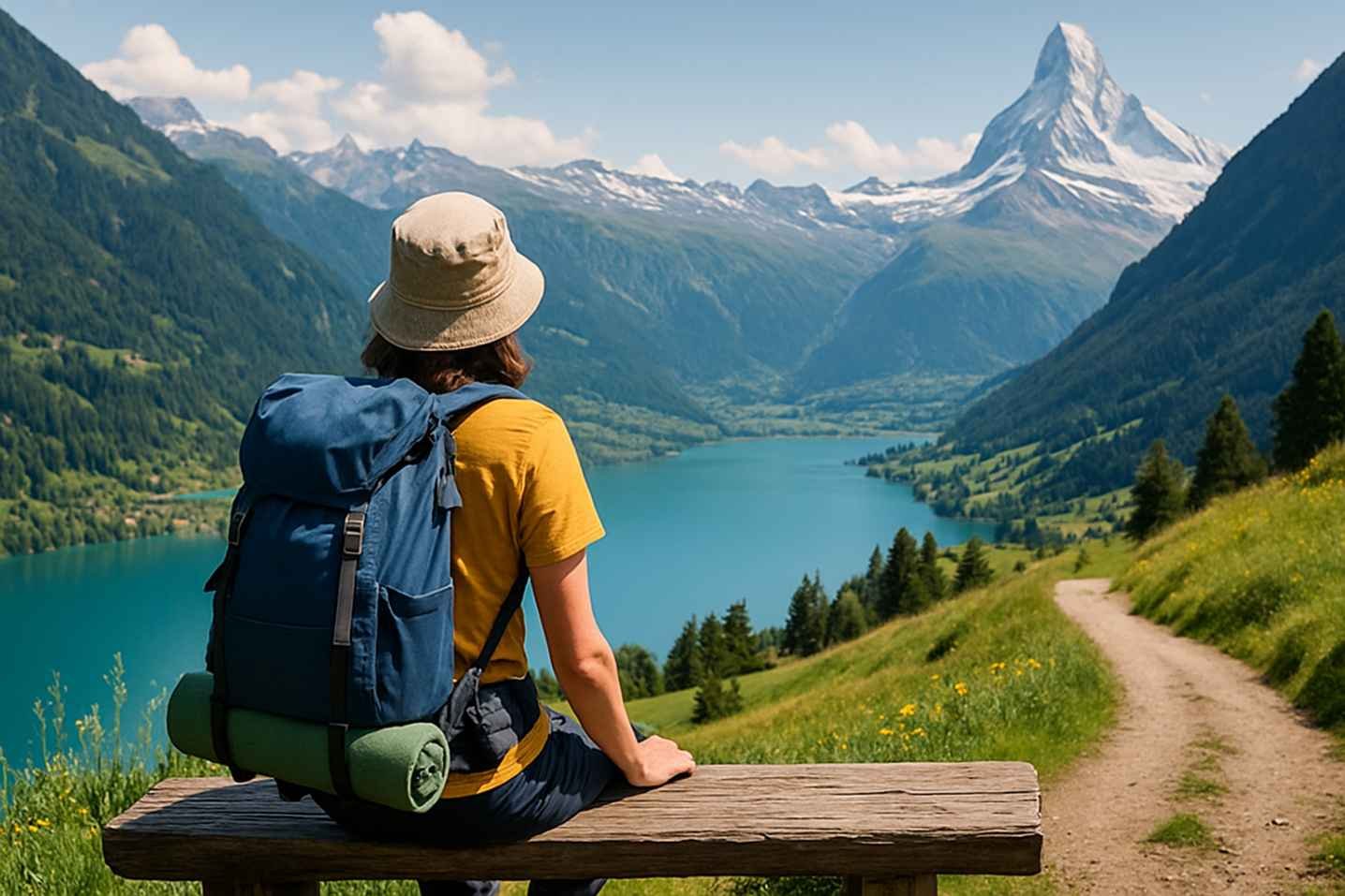
Cheapest Way to Travel in Switzerland (2025 Guide)
Let me be honest with you, when I first moved to Switzerland, one of the biggest shocks wasn’t the weather or the language barriers… it was the price of train tickets. A simple ride from Zurich to Bern? CHF 50 or more. I remember standing at the station thinking, How do locals afford this every week?
But here’s the thing: travel in Switzerland doesn’t have to be expensive if you know the cheapest way to travel in Switzerland and the right ways to move around. And that’s exactly why I created this guide.
Whether you're a new resident, a student, a budget-conscious traveller, or someone who's been here for years and still feels like you're overspending on transport, this article is for you.
Over the years, I’ve tried it all: full-fare tickets (regret), regional passes (lifesaver), Supersaver deals (absolute win), and even ride-sharing with complete strangers (surprisingly fun!). I've learned what works, what’s worth it, and what to avoid completely.
My goal here is simple: to share with you everything I’ve learned, the real, everyday advice I wish someone had given me when I started living and traveling in Switzerland on a budget. From train passes and PostBuses, to cheap scenic routes, biking hacks, and where people make the most common mistakes, this is your ultimate guide to the cheapest way to travel in Switzerland.
Because honestly? Life here is beautiful, but it doesn’t need to break the bank.
Let’s make Switzerland accessible, enjoyable, and most importantly, affordable for everyone who dreams of budget travel in Switzerland.
 Quick Comparison: What’s the Cheapest Way to Travel in Switzerland?
If you’re short on time or just want a quick idea of what’s best for your budget, here’s a simple breakdown of Switzerland’s most affordable travel options. I’ve personally used each of these sometimes in combination, depending on the region, season, and purpose of the trip.
| Travel Method | Best For | Typical Cost | Pros | Cons |
| Swiss Travel Pass | Tourists exploring multiple cities | CHF 75–120/day | Unlimited access to trains, buses, boats, + museums | Expensive if you're not moving around a lot |
| Supersaver Tickets | Locals & budget travellers | CHF 10–40/trip | Huge discounts (up to 70%) on regular routes | Fixed times, non-refundable |
| Regional Travel Passes | Slow travellers in one region | CHF 40–80/day | Covers cable cars, boats, and buses perfect for hiking trips | Only valid in one area |
| PostBus | Scenic rural travel | CHF 5–25/trip | Beautiful routes, cheap, reliable | Limited frequency in remote areas |
| Ridesharing (BlaBlaCar) | Long-distance, low-budget travel | CHF 8–30/trip | Social, affordable, flexible | Depends on driver availability |
| Bike Rentals (PubliBike) | City commuting | CHF 0–5/trip | Eco-friendly, fun, fast in cities | Weather dependent, not ideal for long distances |
| Walking | Local exploration | Free | Healthy, immersive, totally free | Time-consuming for long trips |
My Tip: I often combine Supersaver tickets with bike rentals or PostBuses to create a flexible, affordable trip that doesn’t feel budget at all.
 Swiss Travel Pass – When It’s Worth It (and When It’s Not)
Let me start by saying this: The Swiss Travel Pass is amazing… if used the right way.
I used it for the first time when my brother came to visit me from abroad. We had 5 days to see as much of Switzerland as we could. We jumped from Lucerne to Interlaken, cruised across Lake Geneva, and even took the panoramic train from Zermatt to St. Moritz. All without ever buying another ticket.
That’s the magic of the Swiss Travel Pass.
What is it?
The Swiss Travel Pass gives you unlimited travel on:
- All SBB trains (national rail)
- Trams, buses, and boats
- 500+ museums across Switzerland
- Scenic trains like the Glacier Express (seat reservation required)
It’s available for 3, 4, 6, 8, or 15 days, and you can choose between consecutive or flexible travel days.
When It’s Worth It
- You're traveling every day to different cities/regions
- You're visiting tourist hot spots (like Lucerne, Zermatt, Geneva)
- You want to include museums, boats, and cable cars
- You prefer not to worry about individual tickets
Example: If you're planning to go from Zurich → Lucerne → Interlaken → Lauterbrunnen → Geneva in 4-5 days, this pass could save you a lot of money and stress.
When It’s Not Worth It
- You're staying in one city or region for most of your trip
- You’re only doing 1–2 train trips during your stay
- You’re flexible and can book Supersaver tickets instead
- You're a resident - this pass is meant for tourists
My Honest Advice
If you're visiting for 4+ days and plan to explore, the Swiss Travel Pass is convenient and cost-effective. But if you're only taking a couple of trains during your trip? Skip it. Go for Supersaver tickets or a regional pass instead (more on that below!).
I’ve seen people buy the pass and barely use it, and it honestly hurts to watch them waste that money.
Plan your route first, then decide.
 Bonus Tips for Budget Travelers in Switzerland
Over the years, I’ve learned a few smart habits that have saved me hundreds of francs without depriving me of comfort or experience. If you’re committed to finding the cheapest way to travel in Switzerland, the small things truly matter:
1. Employ SBB Mobile (Religiously)
Get the SBB Mobile app, it’s life-changing. You will find Supersaver tickets, last-minute offers and real-time information on the current train running schedule. One last thing I always do the night before a trip is check the app on the off chance you can snag a route for 50–70% off.
2. Travel Off-Peak
If you can, avoid the rush hour trains (usually from 6 to 9 a.m. and 4 to 7 p.m.) and weekends. Traveling in the middle of the day, in the middle of the week, is usually cheaper and so much calmer.
3. Split Long Journeys into Segments
Occasionally, it’s cheaper to book two separate portions of a Supersaver ticket journey than it is to book one direct journey. I had done a semi-contrived split-lashing Zurich → Zermatt into Zurich → Visp + Visp → Zermatt and saved CHF 18 by doing so.
4. Buy Tickets in Advance
This is a simple hack, but it’s effective: The sooner you book, the less you’ll pay. Some Supersaver tickets are posted 30 days in advance, and they’re snatched up quickly, so plan in advance if you’re able.
5. My Personal Hack:
Combine a local pass with free walking tours, supermarket picnics (hi Coop + Migros) and bike rentals, and you’ll get a full experience without the crushing expense.
 Common Mistakes to Avoid When Traveling in Switzerland
Even after being here a year, you still can spot people making the same mistakes visitors make—and I made plenty of mistakes when I first arrived here. Here’s what to steer clear of if finding the cheapest way to travel in Switzerland without overpaying or losing out is your goal:
1. Buying Full-Price Tickets Last Minute
This is presumably the No. 1 error. Swiss train services are fantastic, but they don’t come cheap. If you do attempt to buy a ticket on the day of travel, you’re frequently looking at paying double or even triple what a Supersaver ticket would have cost you.
2. Ignoring Regional Passes
Here’s a breakdown of the Offers for different kinds of Tourists It is a common mistake that many tourists make buying the Swiss Travel Pass ( Read More ), needing it just for a specific region (E.g: Berner Oberland Pass or Tell-Pass) and therefore paying way too much for fewer benefits, but more form of slow-travel in one area.
3. Forgetting to Check Validity
I’ve watched people purchase a Supersaver ticket for the wrong train time or wrong route and unfortunately, they’re non-refundable. Double-check before confirming.
4. Not Exploring Free Travel Options
Short trips are often replaceable with walking, city bikes, or even free local shuttles. Don’t overlook these cost-saving options when you travel in Switzerland!
My Personal Recommendations for Travelling Cheap in Switzerland
After years of exploring Switzerland on a budget, I’ve found a few travel combos that saved me money without making me feel like I was pinching pennies. Here’s what I recommend if you want the cheapest way to travel in Switzerland without sacrificing the experience:
For Short Trips (2–3 Days)
If you’re staying in one region, like around Bern or Lucerne, grab a regional travel pass. I once spent 3 days exploring the Bernese Oberland with a regional pass that covered trains, buses, and even some cable cars, all for under CHF 80. Pair it with bike rentals and some walking, and you get a rich, immersive experience without burning through your budget.
For Longer, Multi-City Trips (5+ Days)
If you want to see multiple cities, say Zurich, Interlaken, and Geneva, the Swiss Travel Pass is your friend. But to keep costs down, use the SBB Supersaver tickets for individual trips when possible. I often check the app early in the morning to snap up discounts and then use bike-sharing in cities for the last mile.
For Scenic & Rural Travel
Don’t underestimate the PostBus. It’s slower, sure, but the views are stunning, and the ticket prices are very reasonable. Once, I took a PostBus from a tiny mountain village down to a train station and saved nearly CHF 20 compared to a taxi.
The key? Mix and match based on your plans, and always plan ahead. Switzerland is beautiful, and you don’t need to spend a fortune to enjoy it fully if you know the best and cheapest ways to travel in Switzerland.
 Ready to Travel Smarter in Switzerland?
I hope this guide gave you not just tips, but also confidence. Switzerland is one of the most stunning countries in the world, and trust me, you don’t have to break the bank to enjoy it, especially if you follow the right strategies for budget travel in Switzerland.
If you’ve learned something new, or if you’re planning a trip and need help figuring out which pass or route is best for your travel in Switzerland, leave a comment below or send me a message! I genuinely love helping people make sense of Swiss transport (especially if it means you get to save some francs).
And hey, if you found this helpful, share it with a friend who’s planning to visit or move to Switzerland. Let’s make travel in Switzerland simpler, smarter, and more enjoyable, one guide at a time.
If you found this budget travel guide helpful, here are a few more articles you shouldn't miss:
What Language Is Spoken in Switzerland? – Learn how to communicate easily across Switzerland’s diverse regions.
Best Hotels in Interlaken – My top hotel picks in Interlaken for every budget and comfort level.
Cost of Food per Day in Switzerland – Get a real sense of what you'll spend on meals, plus some local-saving tips.
FAQs About Budget Travel in Switzerland
What is the very cheapest way of travelling in Switzerland?
The least expensive, bar none, is walking or biking, and it’s usually the most picturesque as well. But where public transport is concerned, nothing beats Saver Day Passes (purchased in advance via the SBB app) for value. One time, I even managed to find a CHF 9 train from Lucerne to Bern that’s almost 70% off the regular rate!
Is the Swiss Travel Pass worth it for you for short stays?
It depends. If you’re just going to one city or a couple of train rides, it’s pretty much not worth it. But if you hope to see several cities or visit multiple attractions in just a few days, then yes it can be incredibly valuable.
How many days in advance can I book Supersaver tickets?
Tickets are sold up to 60 days ahead, but the best discount offers come out about 30 days in advance. I would suggest bidding early and buying once your dates are solidified. They are nonrefundable, so make a reservation only if you are extremely certain.
What’s best for someone in Switzerland for the long haul?
If you live here, I strongly suggest obtaining a Half Fare Card. You pay 185 Swiss francs per year and get 50 percent off on nearly all public transport trains, buses, boats, and even some cable cars. It quickly pays for itself if you travel more than a few times a year.
Can I visit Switzerland on a budget?
Absolutely. It requires some advance planning, but with Supersaver tickets, regional passes, PostBus routes, and even a bit of walking or biking, you can travel the country for much less than most people expect. I have undertaken full-day trips for under 30 Swiss francs and had some of my favorite days in Switzerland while doing so.
Average Cost of Honeymoon in Switzerland (2025)
When a dear friend from overseas planned to spend her honeymoon in Switzerland, she called me, a longtime local, to help her figure out how much it would cost her, and not in fear of an unfriendly exchange rate. And I’m not going to lie: they were surprised, at first. Switzerland is renowned for its natural beauty, but let’s be honest, it isn’t cheap. The average cost of honeymoon in Switzerland can catch many first-timers off guard.
But it’s also one of the most memorable, romantic destinations on the planet if you know how to do it right.
I’m penning this guide not just from facts and figures but from actual dialogues, my personal experiences, and what I’ve learned from working to help couples make their dream honeymoon come true. Whether you’re already in Switzerland or visiting for the first time, I want to help you skip the mistakes, spend wisely, and instead focus on what really matters: making memories that will last a lifetime.
In this guide, I’ll also break down costs for you, provide honest recommendations, and offer a more personal roadmap so you know exactly what to do, what to skip, and how to have the most incredible time on your honeymoon in Switzerland without stressing about every franc. Understanding the real cost of a honeymoon in Switzerland is the first step toward planning with clarity and joy.
 Is Switzerland Good for a Honeymoon? (Quick Overview)
Definitely Switzerland is one of the most romantic, stunning honeymoon locations from all over the globe! And I’m not just saying that. I've been living here for years and still, every time I go to places like Lauterbrunnen, or Zermatt, or Lake Lucerne it feels like I'm walking through a living postcard.
The true magic of a honeymoon in Switzerland isn’t only the heart-stopping landscapes, which it definitely has some of but the sense of peace, intimacy and luxury that envelopes you. From Alps train rides to candlelight dinners in centuries-old mountain chalets, it all exudes discreet luxury and is stunningly personal.
Of course, it’s not a budget destination, and understanding the average cost of honeymoon in Switzerland is essential if you want to plan wisely. This country rewards savvy travellers with moments they’ll never forget, but it can easily overwhelm you if you don’t know where to start. Times have changed, and booking a honeymoon is no longer what it once was, so this guide will help you identify exactly what’s worth spending on, understand the cost of honeymoon in Switzerland, and craft a trip that fits both your heart and your bank balance.
 Average Honeymoon Cost in Switzerland (Straight Answer)
So, let’s cut to the case – how much we can expect to spend on a honeymoon in Switzerland? Although a combination of local knowledge, personal experience and helping others plan tells me that I’d be like, this:
You can expect to spend anything between CHF 3,500 to CHF 7,500 for a 1 week honeymoon in Switzerland for two.
The real price will depend on your travel style budget, midrange, or luxury. Some spend their nights in intimate, homey guesthouses and visit charming towns with a Swiss Travel Pass, whereas others pull out all the stops with luxury spa resorts, helicopter excursions and gourmet restaurants.
Here’s a quick breakdown to help you visualize:
| Travel Style | Approx. Total Cost (1 Week) | What It Includes |
| Budget | CHF 3,500–4,500 | Affordable hotels, public transport, casual dining, free activities |
| Mid-Range | CHF 5,000–6,500 | 3–4 star hotels, scenic train rides, nice dinners, guided tours |
| Luxury | CHF 6,500–7,500+ | 5-star hotels, gourmet dining, spa days, premium excursions |
Tip from me: Switzerland rewards thoughtful planning. You don’t have to spend a fortune to have an unforgettable honeymoon, just choose experiences that feel luxurious, even if they aren’t expensive.
Main Cost Breakdown (Simple & Skimmable)
Here’s where we get into the real numbers. I’ve broken everything down into clear categories, so you can see where your money will go and where you might save it.
Accommodation (CHF 100 – 700 per night)
Switzerland has everything from simple mountain lodges to luxury spa resorts. This is where your budget will vary the most.
| Type | Price/Night (CHF) | Best For |
| Guesthouse / Airbnb | 100–200 | Budget couples, cozy stays |
| 3–4 Star Hotel | 200–400 | Comfortable & central |
| Luxury Hotel | 500–700+ | Spa retreats, mountain resorts |
My Tip: You don’t need a 5-star stay every night. One night in a beautiful spa hotel, like in St. Moritz or Zermatt, can give you a honeymoon highlight then mix it with charming, affordable stays in towns like Grindelwald or Interlaken.
Transportation (CHF 300 – 800 for the whole trip)
Switzerland’s trains are fast, safe, and romantic and the views? Unreal. If you plan to explore different cities or mountain regions, the Swiss Travel Pass is your best friend.
| Option | Cost (CHF) | Notes |
| Swiss Travel Pass (8 days) | 418 per person | Includes trains, buses, boats, museums |
| Regional Pass (e.g. Berner Oberland) | 150–250 | Great for focused trips |
| Car Rental | 500–900/week | Best for exploring the countryside |
My Tip: Unless you’re staying remote, don’t rent a car! Trains are more scenic and stress-free. Plus, you’ll avoid high parking fees.
Food & Dining (CHF 500 – 1,200 total for two)
Food in Switzerland is delicious but not cheap. Still, it’s easy to balance fine dining with more affordable, equally enjoyable options.
| Meal Type | Cost (CHF) | Tip |
| Bakery breakfast | 5–10/person | Try local “Gipfeli” (croissants) |
| Casual lunch | 20–35/person | Coop/Migros takeaways are great |
| Dinner at nice restaurant | 70–120/couple | Swiss fondue is a must |
| Fine dining | 200+/couple | Save this for one night out! |
My Tip: We once had a lakeside picnic in Lucerne fresh bread, local cheese, and wine. It cost less than CHF 30, and it was honestly more romantic than any restaurant.
Attractions & Experiences (CHF 300 – 800 total)
This is where you’ll create unforgettable moments. Some things are expensive others are completely free and just as special.
| Activity | Cost (CHF) | Worth It? |
| Jungfraujoch (Top of Europe) | 100–150/person | An iconic view, can be touristy |
| Glacier Express | 150–250/person | Stunning, slow train through the Alps |
| Cable cars (e.g. Pilatus, Titlis) | 30–70/person | Views you’ll never forget |
| Boat ride on Lake Lucerne | 25–40/person | Romantic and peaceful |
| Spa day in a mountain hotel | 80–200/couple | Total relaxation |
My Tip: Don’t try to do everything. Choose 3-4 special experiences and leave time to just wander, relax, and enjoy. Sometimes a quiet walk by a lake is the best memory.
Extras & Special Touches (CHF 100 – 500)
These are the little things that can turn a great trip into a magical one.
| Experience | Cost (CHF) | Notes |
| Couples photo shoot | 200–400 | Amazing keepsake |
| Horse-drawn carriage in Zermatt | ~100 | Feels like a fairytale |
| Swiss chocolate-making class | 80–150 | Delicious and fun |
| Surprise bouquet/champagne at the hotel | 50–100 | Most hotels will help set this up |
My Tip: I once helped a friend arrange a surprise sunset cruise on Lake Geneva, nothing fancy, but she cried happy tears. It’s these personal moments that matter most.
What to Spend On vs. What to Skip:
| Spend On | Skip or Save On |
| Scenic train rides | Daily fine dining |
| One luxury hotel night | Taxis (use public transport) |
| Unique experiences (spa, cable car) | Overpacked itinerary |
| Swiss Travel Pass | Multiple guided tours |
Example Budgets (3 Levels)
No two honeymoons are the same, and they don’t have to be. Whether you’re watching your wallet or going all out, here are three realistic budget examples for a 7-day honeymoon in Switzerland for two people. These examples will help you understand the average cost of honeymoon in Switzerland at different spending levels.
Budget Honeymoon – CHF 3,500–4,000
- Stay in guesthouses or small Airbnb apartments
- Swiss Travel Pass for getting around
- Casual dining + the occasional nice dinner
- Free attractions like lake walks, local hikes, city passes
- One major splurge: maybe a Jungfraujoch or spa day
Personal Note: A couple I helped stayed mostly in hostels with private rooms and cooked their own meals from local markets they loved the flexibility and felt like locals.
Mid-Range Honeymoon – CHF 5,000–6,000
- Mix of boutique hotels + 1–2 nights in a 4-star romantic resort
- Glacier Express or scenic rail ride
- Mix of cozy dinners + 1 fancy night out
- Cable cars, chocolate tasting, maybe a photo shoot
Personal Tip: This is the sweet spot where most couples feel they’re really on honeymoon without feeling guilty about costs. Balanced and meaningful.
Luxury Honeymoon – CHF 7,000–8,000+
- 5-star hotels with spa services
- Private transfers or First Class train upgrades
- Fine dining + curated wine experiences
- Exclusive experiences (e.g., helicopter tour, private boat ride)
- Personal concierge, flowers, surprises, everything personalized
Personal Note: One couple splurged on a night at the Badrutt’s Palace in St. Moritz they still call it the best night of their lives.
 How to Save Without Losing Romance
Let me tell you something I’ve learned from living here and helping friends plan: the most romantic moments in Switzerland don’t cost much or anything at all.
Here are some real tips that help you save money while still feeling like you’re in a dream:
1. Choose Romance Over Luxury
Skip the pricey hotel every night. Instead, book one unforgettable night in a luxury spa hotel (maybe in Zermatt or Interlaken), and spend the rest in charming local guesthouses with alpine views. Trust me, you won’t miss the marble bathrooms.
2. Travel Smart with a Swiss Pass
The Swiss Travel Pass is not just about trains it includes boats, buses, and even free museum entries. It saves you hundreds while letting you see more of the country at a relaxed pace.
3. Create DIY Romantic Moments
Some of my most memorable evenings here? A simple picnic by Lake Thun, watching the sunset with wine and cheese. It cost CHF 25 total, and felt like a movie scene.
4. Travel Off-Peak
May, early June, and September are less crowded, more peaceful, and often 20–30% cheaper. The weather’s still beautiful, and you’ll get more privacy too.
5. Avoid Tourist Traps
Skip overpriced souvenir shops and overrated must-do attractions. Instead, explore hidden gems like Appenzell, Blausee, or quiet mountain trails. These are the places you’ll remember.
Romance doesn’t live in price tags! it lives in connection, scenery, and shared adventure. And Switzerland is full of it, if you know where to look.
Final Thoughts: Your Honeymoon, Your Story
Planning a honeymoon in Switzerland may sound a daunting task at first, but once you are clear about the things that you truly love, everything else magically falls into place. Whether you’re fantasizing about mountain peaks, lakeside walks, or candlelit dinners underneath the stars, this country provides you with the space needed to slow down and exist together.
I have written down everything I can think of not just the prices, but what truly seems worth it. From understanding the average cost of honeymoon in Switzerland to discovering the experiences that create the most value, my goal is to help you plan with confidence.
If you have any questions, or need help planning, or just want some more personal tips then I am here and you can contact me anytime. I’m here to help make Switzerland feel more approachable, more local, more memorable for you.
If this honeymoon budget guide helped you, you’ll definitely want to check these next:
Cheapest Way to Travel in Switzerland – Save big while exploring every corner of the country.
Cost of Food per Day in Switzerland – Know what to expect when dining out or buying groceries.
What Language Is Spoken in Switzerland? – Navigate Swiss regions smoothly by understanding the local languages.
FAQs About Honeymoon Costs in Switzerland
Is Switzerland not all that expensive for a honeymoon?
It all depends on how you dream it up. Switzerland is an expensive destination, but with some savvy, like using the Swiss Travel Pass, a bit of travel hacking (when to visit, and ways to get budget and luxury accommodation under one roof), it’s possible to have a splendid, romantic honeymoon for as little as CHF 3,500 a week. No need to spend a fortune for a once-in-a-lifetime experience here.
When is the best time to Honeymoon in Switzerland?
Perfect time: May, early June, and September. These months provide gorgeous weather, less crowded venues, and slightly improved hotel rates compared with high summer. Winter honeymoons (Dec-Feb) are also fantastic if you love snow, cosy chalets, and skiing.
How many days do you need for a honeymoon in Switzerland?
7–10 days is the sweet spot. It’s the perfect amount of time to visit 2–3 regions (think Lucerne, Zermatt, and Lauterbrunnen) without feeling too rushed and still leave time for relaxing, spa days, and romance.
Is a Swiss Travel Pass a good value for a honeymoon?
Yes, especially for couples travelling to more than one locale. It includes just about every train, boat, bus, and even museum admission. Not to mention, train travel in Switzerland is unbelievably scenic and relaxing (and takes driving and parking completely off the table!).

Best Fast Food Restaurants in Switzerland | Ultimate Guide
Switzerland is celebrated for its grand Alps, world-class skiing, extravagance observes, and debauched Swiss chocolate. In any case, when one considers of Swiss food, the quick nourishment industry isn't the to begin with thing that comes to mind.
Yet, the quick nourishment scene in Switzerland is lively and flourishing, adjusting to the tall guidelines of Swiss society. The quick nourishment eateries here regularly blend quality with comfort, guaranteeing that fast dinners don’t compromise the well known Swiss precision.
I first found the one-of-a-kind world of quick nourishment in Switzerland amid a trip to Zurich. I had anticipated the ordinary fast food experience, but was shocked by the assortment of solid, eco-friendly, and feasible alternatives that starkly differentiated Swiss fast food restaurants from those in other countries.
The more I investigated, the more I realized that quick nourishment in Switzerland had a identity of its claim, mixing nearby flavors, maintainable hones, and natural fixings into fast bites.
In this article, we will investigate Switzerland's quick nourishment industry, revealing both worldwide chains and neighborhood diamonds that center on maintainability, quality, and innovation.
Fast Food Restaurants in Switzerland: An Overview
Growth of the Fast Food Restaurants Advertised in Switzerland
Switzerland’s quick nourishment industry has developed consistently, driven by a move in buyer behavior towards speedy, helpful suppers without compromising on quality. In differentiate to the cliché picture of oily, unfortunate nourishment, Switzerland has grasped quick nourishment with a health-conscious twist.
The Swiss Government Factual Office gauges that Switzerland’s fast food industry creates over CHF 2 billion yearly, with chains like McDonald’s, Burger Ruler, and KFC being a few of the major players.
One of the key patterns driving this development is the urbanisation of Swiss cities. With individuals driving progressively fast-paced lives, the request for speedy eating alternatives is increasing.
However, Swiss buyers anticipate higher quality and moral guidelines from quick nourishment suppliers, which has affected the advertise to adjust to economical and natural offerings.

Worldwide Fast Food Restaurant Chains in Switzerland
1. McDonald’s Switzerland: Driving with Nearby Flavour and Sustainability
McDonald’s is a worldwide fast food mammoth, but its nearness in Switzerland is interesting due to its overwhelming dependence on locally sourced fixings. Around 80% of McDonald’s fixings in Switzerland come from nearby Swiss ranches, counting hamburger, cheese, and potatoes. This commitment to neighborhood sourcing not as it were bolsters the Swiss economy but moreover decreases the carbon impression related with transporting ingredients.
Swiss Menu: McDonald’s Switzerland offers elite menu things like the Raclette Burger, including conventional Swiss raclette cheese. They’ve moreover presented plant-based alternatives like the McPlant, catering to Switzerland’s developing populace of veggie lovers and vegans.
Sustainability Efforts: The brand has grasped eco-friendly hones, such as lessening plastic utilization, presenting recyclable bundling, and transitioning to renewable vitality sources over numerous of its outlets.
During my final visit to Zurich, I requested the Raclette Burger from McDonald's, and the utilize of locally sourced raclette cheese gave it a extraordinarily Swiss turn. Indeed in a quick nourishment setting, I seem feel the accentuation on quality and maintainability, reflecting the country’s values.
2. Burger King: A Center on Customization and Plant-Based Eating
Burger King is another worldwide chain with a solid decent footing in Switzerland. Known for its flame-grilled burgers, Burger King offers a more customizable encounter than its competitors, permitting clients to tailor their dinners with a wide extend of garnishes and sides.
Vegan and Veggie lover Alternatives: Burger Lord Switzerland has grasped the plant-based development with the presentation of the Revolt Whopper, a completely vegetarian form of its classic Whopper. This burger employments plant-based patties, catering to the expanding request for meat alternatives.
Sustainability: Like McDonald’s, Burger Ruler is moving towards feasible bundling and has killed plastic straws in numerous outlets over the country.
I attempted the Revolt Whopper during a halt in Geneva, and the surface and flavor were about vague from the classic hamburger adaptation. For a quick nourishment chain, Burger King’s commitment to advertising plant-based choices appears how. Switzerland’s quick nourishment showcase is advancing to meet cutting edge expectations.
3. KFC Switzerland: A Southern Twist with Swiss Precision
KFC, known universally for its fricasseed chicken, has found a faithful client base in Switzerland. Whereas KFC keeps up its unique formula for browned chicken, it has adjusted its menu to incorporate more beneficial sides like servings of mixed greens and barbecued chicken choices to request to Swiss consumers.
Local Sourcing: Like other worldwide chains, KFC Switzerland depends on neighborhood providers for its chicken, guaranteeing freshness and lessening the natural affect of bringing in ingredients.
When I gone by a KFC outlet in Basel, I taken note that the restaurant’s cleanliness and food introduction were on standard with sit-down eateries, reflecting the Swiss accentuation on quality, indeed in fast food settings.
 Local Fast Food Restaurants: Swiss Quality on the Go
While universal chains rule the fast food scene, Switzerland brags a few nearby fast-food brands that offer a interestingly Swiss experience.
1. Holy Cow! Gourmet Burger Company
Founded in Lausanne in 2009, Sacred Bovine! has quickly extended to cities like Geneva, Zurich, and Basel. The brand’s ethos is centered on giving natural, new, and locally sourced fixings. Their menu incorporates a assortment of burgers made with Swiss hamburger, free-range chicken, and veggie lover alternatives, all served with a side of hand-cut fries.
Sustainability Center: Holy Cow! employments biodegradable bundling, and their eateries are fueled by renewable vitality sources, making them a pioneer in feasible fast food in Switzerland.
Menu Highlights: Their Zermatt Burger, made with locally sourced raclette cheese, is a must-try for anybody looking for a taste of Swiss food in a fast food setting.
My visit to a Sacred Bovine! in Lausanne was a reviving flight from ordinary quick nourishment. The quality of the fixings was discernible, and the biodegradable bundling fortified the brand’s commitment to sustainability.
2. Hitzberger: Healthy Fast Food
Founded by eminent Swiss chef Eduard Hitzberger, Hitzberger takes a solid approach to quick nourishment. The restaurant chain offers a assortment of salads, wraps, and smoothies, all made with natural and locally sourced fixings. Their center on sound eating has made them a favorite among health-conscious consumers.
Sustainability Hones: Hitzberger employments eco-friendly bundling and emphasizes a zero-waste arrangement over its outlets. Their commitment to maintainability is apparent in each viewpoint of the commerce, from sourcing fixings to squander management.
Signature Dishes: Hitzberger’s Quinoa Bowl and Veggie Wrap are culminate cases of how quick nourishment can be both nutritious and delicious.
I first attempted Hitzberger during a work trip in Zurich, and blown absent by the quality of the nourishment. The quinoa bowl was not as it were filling but stuffed with new vegetables, demonstrating that quick nourishment can undoubtedly be solid and feasible.
 Healthy and Maintainable Fast Food Restaurants in Switzerland
1. Plant-Based and Veggie lover Fast Food
Switzerland has seen a noteworthy move towards plant-based diets, and the quick nourishment industry has reacted appropriately. Chains like McDonald’s, Burger Ruler, and Heavenly Dairy animals! have presented vegetarian choices, whereas neighborhood brands like Veganburgers.ch specialize in 100% plant-based meals.
Vegan Alternatives: Numerous fast food outlets presently offer veggie lover burgers, servings of mixed greens, and wraps made with plant-based proteins. McDonald’s Switzerland, for illustration, presented the McPlant burger to cater to the developing vegetarian demographic.
Health-conscious Menus: Past plant-based alternatives, quick nourishment chains in Switzerland are centering on advertising gluten-free and low-calorie dinners. This reflects the Swiss inclination for solid eating, indeed when selecting for quick food.
Example: Tram Switzerland offers gluten-free bread and a wide choice of low-calorie servings of mixed greens, making it a go-to alternative for health-conscious diners.
2. Sustainability in the Fast Food Industry
Sustainability is a center esteem in Swiss culture, and the fast food industry has grasped this by executing green hones. Numerous fast-food outlets are centering on diminishing their carbon impression, minimizing squander, and utilizing renewable energy.
Packaging: Fast food chains are transitioning to biodegradable bundling to decrease plastic squander. Both McDonald’s and Burger Lord have disposed of plastic straws and exchanged to paper alternatives.
Food Squander Lessening: Swiss fast food chains are too collaborating with apps to decrease nourishment squander. This app has been broadly received by quick nourishment chains over Switzerland.
3. Zero-Waste Initiatives
Many nearby fast-food chains are embracing zero-waste arrangements to minimize their natural affect. These activities incorporate utilizing compostable bundling, reusing materials, and diminishing nourishment squander. Sacred Bovine! and Hitzberger are two driving cases of fast food chains centering on minimizing their carbon impression whereas conveying high-quality meals.
 Popular fast food restaurants for tourists
Switzerland’s fast food scene offers a assortment of choices for sightseers looking for a fast nibble without compromising on quality or supportability. Here are a few best picks:
1. Manora Restaurant
While not a conventional fast food chain, Manora offers a quick-service feasting encounter with a center on new, regular fixings. Found in division stores over Switzerland, Manora gives sound, quick choices such as servings of mixed greens, pasta, and barbecued meats. The eatery emphasizes locally sourced deliver and eco-friendly hones, making it a extraordinary choice for health-conscious travelers.
2. Vapiano
Vapiano is a prevalent fast-casual chain in Switzerland advertising Italian-inspired dishes, counting crisply made pasta, servings of mixed greens, and pizzas. What sets Vapiano separated its accentuation on new fixings and made-to-order suppers, guaranteeing each dish is custom fitted to the customer’s preferences.
3. Nordsee
For fish significant others, Nordsee offers speedy and scrumptious fish suppers, counting barbecued angle, shrimp, and angle sandwiches. The brand centers on economical fish sourcing, guaranteeing that the angle and fish utilized in their dinners are capably harvested.
The toll of Fast Food Restaurants in Switzerland
One of the key perspectives to consider when talking about fast food in Switzerland is the taken a toll. Switzerland known for being one of the most costly nations in the world, and this is reflected in the costs of fast food. A commonplace dinner at McDonald’s can taken a toll between CHF 13 to 15. essentially higher than in neighboring nations like France or Germany.
However, the tall costs reflect the quality and moral benchmarks of the food being served. Swiss fast food chains regularly utilize locally sourced fixings, pay reasonable compensation to representatives, and follow to strict nourishment security controls, all of which contribute to the higher cost.
During my visit to Zurich, I requested a straightforward feast from McDonald’s, which came to around CHF 14. Whereas this is more costly than in other nations, the quality of the nourishment and the clean, comfortable environment made it worth the cost. Furthermore, knowing that the fixings were locally sourced included an additional layer of satisfaction.
 The Future of Fast Food Restaurants in Switzerland
The future of fast food restaurants in Switzerland is likely to be molded by two major patterns: maintainability and wellbeing awareness. As buyers gotten to be more mindful of the natural affect of their food choices. Fast food chains will require to proceed advancing to meet the request for eco-friendly and plant-based options.
1. Plant-Based Revolution
The slant toward plant-based eating is anticipated to proceed developing in Switzerland, with more fast-food chains advertising veggie lover and veggie lover alternatives. Brands like Sacred Bovine! and Burger Lord have as of now presented plant-based burgers. This slant is likely to grow to incorporate more plant-based proteins, dairy choices, and eco-friendly packaging.
2. Technology and Fast Food
The rise of advanced requesting and nourishment conveyance stages such as Uber Eats and Smood has made fast food more open than ever.
3. Sustainability Certifications
In the future, more fast-food chains may look for supportability certifications to flag their commitment to eco-friendly hones. Chains that utilize renewable vitality, source neighborhood fixings, and diminish squander are likely to pull in naturally cognizant consumers.
Healthy Fast-food Restaurants in Switzerland
Switzerland’s fast-food eateries are a unique mix of universal impact, neighborhood flavors, and a solid commitment to maintainability. The accentuation on quality, nearby sourcing, and eco-friendly hones makes Swiss fast food a reflection of the country’s broader values of maintainability and innovation.
For visitors and local people alike, the fast food eateries in Switzerland are both delightful and dependable. As the industry proceeds to advance, with a center on plant-based diets, computerized development, and maintainability, Switzerland is balanced to lead the way in changing the future of quick food.
Next time you’re in Switzerland, take the opportunity to investigate the fast food scene. Whether you’re in a rush or looking for a fast nibble between touring, Switzerland’s. fast food restaurants will offer you more than fair a dinner; they’ll offer you a taste of Swiss culture with a side of maintainability. Don’t disregard to subscribe to our bulletin to get modern overhauls routinely.

Parking lots in Switzerland | Ultimate Local Guide
I still remember my first weeks here, eyes wide, drawing in breaths of clean mountain air and utterly confounded about where I was supposed to park my car. On one hand, I was, for a while, in my element, flirting with the impossibility of not having made the perfect choice for a place to sit, and five minutes later, I was staring at a parking ticket jammed beneath the windshield of my car. It wasn’t really about the money. It was about not knowing the rules, the subtle, unspoken details about parking lots in Switzerland that no tourist brochure or guide to relocating ever manages to articulate.
That’s exactly why I’m writing this guide.
Whether you live in Switzerland all year or are simply visiting, parking may seem a quiet ordeal of its own. The signs are written in French, German or Italian, the Swiss parking zones are colour-coded like a Rubik’s cube, and the rules are enforced with Swiss-level precision. Miss a detail? You might be facing a fine or, worse, a towed car.
But once you learn the mechanism, the Swiss parking system is among the most efficient you’ll ever encounter. That’s the beauty of this country: It’s dedicated to order, fairness, and simplicity. You just need someone to explain it to you like a human, not like a government pamphlet. That’s where I come in.
In this guide, I am going to take your hand and guide you through everything, no fussing, no confusion here. Just real tips from real experience.
We’ll cover the dos and don’ts, the unexpected quirks, and the little things that can make a big difference.
Because at the end of the day, my mission with Swiss Sustain is simple:
To make life in Switzerland easier, smoother, and better-informed through real advice, not guesswork.
Let’s start with understanding why parking here is a bit different from anywhere else…
 Why Parking in Switzerland is Unique
If there is one thing that best personifies the Swiss mentality, it is parking. Neat lines, clear signage, and rules that aren’t there as guidelines, they’re gospel. I mean, I thought, How hard could parking be? But with parking lots in Switzerland, I very soon found out that parking has an entirely different meaning! It’s a complete system based on discipline, economy and trust.
In truth, one of my first experiences with parking in Swiss cities was unforgettable. I parked in what appeared to be a regular spot on a quiet side street in Zurich, only to return to see a 40 CHF fine for not having the parking disc adjusted. It wasn’t intentional, just my error, but still, it was a reminder: everything here functions like a machine, and that means you, too, are supposed to park like a machine.
The Swiss Philosophy: Fairness & Order
Switzerland values shared spaces and mutual respect. Switzerland's parking zones are colour-coded, well-marked, and designed with fairness in mind. For example:
- Blue zones offer you free short-term parking, provided you have a disc.
- White zones are paid, with competitive and consistent pricing.
- Yellow zones? Reserved or private. No grey area. No, just five minutes.
And that structure pretty much ensures that plenty of people get the chance to have a fair shot, whether you’re a tourist, a local or an expat. But it also means that if you don’t play by the rules, there are consequences.
Fines: Real, Quick, and Non-Negotiable
Swiss enforcement is no joke. Parking tickets are written fast, adjudicated swiftly, and seldom contested with success. There is no talking your way out of that. And honestly? I like that, because that’s what keeps the system going.
A friend visiting from the U.S. once said to me, It’s like the parking police here have teleportation powers. She wasn’t wrong.
But, when you get the hang of it, you realize that it actually makes life easier. You always know where you are. No guessing. No hidden rules. Just clear expectations.
 White Zones (Paid Parking) – What You Need to Know
Let’s start with the most common type of public parking in Switzerland: the white zones. If you see parking spaces marked with white lines, you’re in a paid public parking area, and that usually means two things:
- You’re close to a busy area (city centre, shopping street, train station)
- You’ll need to pay for your spot either at a ticket machine or via an app
Sounds simple enough, right? It is, once you know how it works.
How It Works
You pull into a white-lined parking spot and look around for a nearby ticket machine, usually just a few steps away. Most of them will have a sign above in German, French, or Italian, depending on the region. Don’t panic if you don’t speak the language. The icons are intuitive, and many machines offer English as an option.
You simply:
- Enter your license plate number or parking spot number (varies by machine)
- Select how long you want to park
- Pay by card, coins, or app (if the area supports it)
- Place the ticket clearly on your dashboard (unless the machine logs it digitally)
Important: Some areas still require the ticket even if you pay digitally. Always check the instructions on the meter! It’ll usually say ticket to display if it’s necessary.
Personal Experience
I remember once parking in Lugano on a sunny afternoon and paying for 90 minutes, sticking the ticket on the dash, and going for a lakeside walk. I lost track of time (those lake views will do that) and came back about 20 minutes late. Sure enough CHF 40 fine is waiting for me. Totally fair, and honestly? A good reminder to set an alarm on my phone.
Tip: Always set a timer on your phone right after you pay, especially in cities like Zurich, Geneva, and Basel. They don’t mess around with time limits.
Parking Apps That Make Life Easier
Thankfully, you don’t always need coins or a ticket machine anymore. These parking apps are real game-changers, especially in cities:
ParkingPay
- Used across many Swiss municipalities
- Let’s you start, extend, or stop your parking session
- Great for avoiding fines if your plans change
EasyPark
- Super popular in Europe
- Works in major Swiss cities
- You can start and stop parking remotely, no more rushing back to your car
Twint (Swiss-only users)
- Some meters let you scan a QR code and pay directly through Twint (a widely used Swiss mobile payment app)
Pro Tip: Set up these apps before your trip or move. That way, when you find a spot, you’re not standing there downloading and verifying your account in the middle of the street.
Typical Rates (Rough Estimate)
- CHF 1.50 – 2.50/hour in small to mid-sized towns
- CHF 3.00 – 5.00/hour in cities or near train stations
- Some garages charge per 15 minutes, so always read the details
Maximum parking times vary, but are usually 1–2 hours in central areas, and longer in less busy zones. Check the signs closely—Switzerland loves precision.
TL;DR:
- White zones are paid parking spots marked by white lines.
- Use ticket machines or apps like ParkingPay and EasyPark
- Set a timer to avoid overstay fines
- Read signs carefully each city can have slightly different rules
 Blue Zones (Disc Parking) – The Swiss Short-Term Secret
Ah, the famous blue zones of Switzerland. If you’ve ever driven through a Swiss town and seen rows of cars parked with no tickets visible, you’re probably looking at a blue zone one of the most common features of parking lots in Switzerland. This system is brilliant, but only if you know how it works.
I’ll be honest, when I first moved to Switzerland, I completely misunderstood blue zones. I thought, Free parking? Great! and went shopping for hours… only to return to a CHF 40 fine. Turns out, it’s free, but not unlimited, and you must use a blue parking disc (Parkscheibe) to do it right.
Let me walk you through everything you need to know.
What Is a Blue Zone?
- Marked by blue lines on the road or parking spaces
- Found mostly in residential areas, small towns, or near local shops
- Allows free parking, but only for a limited time
- You must use a blue parking disc to indicate your arrival time
It’s a great system designed to give everyone a fair chance to park, run errands, or stop by a friend’s place, without paying a cent.
How the Blue Disc System Works
Here’s how to use a blue zone correctly:
- Buy a blue parking disc – They’re sold at gas stations, post offices, convenience shops (often under CHF 5), or online.
- Set your arrival time to the nearest half hour. So if you arrive at 10:10, set it to 10:30.
- Place the disc on your dashboard, clearly visible through the windshield.
- Stick to the time limit, usually 1 hour in urban areas.
Typical Validity Times:
- Monday to Saturday between 8:00 a.m. and 6:00 p.m.
- Free overnight, on Sundays, and on public holidays
- In some rural areas, the free time can extend up to 90 minutes or even 2 hours check the sign!
Common Mistakes to Avoid (I’ve Made a Few…)
Forgetting the Disc
I’ve done this parked quickly to grab bread at the bakery and forgot the disc. Even for a 10-minute stop, that fine arrived like Swiss clockwork.
Setting the Wrong Time
Set it to the next nearest half hour, not the exact minute you parked.
Overstaying
There’s no grace period. If your disc says 10:30, you need to be gone by 11:30 sharp in a 1-hour zone. Not 11:40. Not 11:35.
Moving Your Car 2 Spaces Over
Nope, it’s not a reset. You have to leave the entire blue zone before you can restart your time.
Pro Tips from a Local Perspective
- Always keep a disc in your glove box. I even have a backup one in my bag just in case.
- In multilingual regions, the signs may say Zone Bleue, Zona Blu, or Blaue Zone, but they all work the same.
- You can use any blue disc, even one bought in another Swiss canton.
Fun fact: The disc system is honour-based, but enforcement is strict. Swiss authorities trust you to follow the rules, but they do check.
Summary:
- Blue zones = free parking, but for a limited time
- Always use a blue disc and set it to the correct time
- Don’t push your luck or try to trick the system! It’s not worth it
- Overnight and Sunday = free and time-unlimited in most places
Want a simple win when driving in Switzerland? Master the blue zone and you’ll feel like a local in no time.
 Yellow Zones (Restricted & Private Parking) - Proceed with Caution
If you’ve gotten the hang of white and blue zones, you are entering the hard part: yellow zones. These spaces are designated for residents, businesses or holders of special permits. Yellow means no parking under any circumstances without permission in Switzerland, and believe you me, now is not the time to roll that dice.
What Are Yellow Zones?
- Designated with Yellow Lines In the Road or the Curb.
- Many are located in residential areas and at local businesses or loading zones
- There may be fines on the spot if you park without a proper permit, or worse, if you return to a towed car
Why You Should Pay Attention
A local friend informed me about her cousin who parked in a yellow zone next to an apartment building to quickly stop by. When she emerged, the car was nowhere to be seen. Swiss tow trucks are efficient and do not hesitate to drag cars that are parked in private or restricted spaces.
Also, the fines here can be heavier than in white or blue zones since the space should remain clear for authorised users only.
Getting Permits for Yellow Zones
If you are a resident or operate a business there, you can usually butter your local municipality up for a parking permit. The process can differ from canton to canton and city to city, so consult your local government website or office for more information.
Note that permits can be in short supply, especially in popular destinations such as Zurich or Geneva. Instead, many residents are left parking at public garages or utilising park-and-ride facilities.
Local Insight
In parts of Switzerland, yellow zones are stringently enforced around the clock, but in other places, there may only be limitations during work hours or specific days. Always check the signs that go with the bay – they’ll tell you the specific rules for that zone.
Recall: Switzerland likes order, and it likes fairness. Parking in a yellow zone without authorisation is disrespectful, as proven by the actions the authorities take.
Quick Takeaway:
- Yellow = no parking without permits
- Risk of fines and towing
- Residents/businesses can obtain permits via the local authority
- Always read signs closely, restrictions vary by location and time
 Public Parking Lots & Garages – What It's Really Like
Let me say this upfront: Swiss public parking garages are some of the cleanest, safest, and most organised I’ve ever used. But that doesn’t mean it’s always smooth sailing, especially if you’re new here or coming from a country where underground parking is a chaotic mess.
The first time I used a parking garage in Lausanne, I was genuinely impressed. The floors were spotless, the signs were crystal clear, and no joke, it even smelled clean. But then came the machine. The infamous moment when I realised I had no idea how to pay.
Let’s talk about how these garages work, what to expect, and how to make your life easier.
How Swiss Parking Garages Work
Most public garages (especially in cities or near train stations) are:
- Underground or multi-level
- Well-lit and secure, often with CCTV
- Clearly marked by signs saying Parking or Parkhaus
Here’s the basic flow:
- Enter – The barrier opens automatically or gives you a ticket.
- Park – Usually, spaces are clearly numbered and colour-coded (some even show red/green lights for occupied/available spots).
- Pay before you return to your car – Look for a central payment machine.
- Insert your ticket and pay – Most machines accept card, cash, or Twint (Swiss mobile payment).
- Return to your car and exit – Use the paid ticket at the exit barrier.
Real-Life Struggles
Here’s where I tripped up my first few times:
- I tried to pay at the exit barrier like in some other countries. Not how it works here. You need to pay at the machine before returning to your car.
- Some garages give you a ticket when entering, but others now use license plate scanning. That threw me off, especially when no ticket came out, and I panicked thinking the machine was broken.
- One time in Interlaken, I left my paid ticket inside the car… then couldn’t get out of the barrier without running back and grabbing it. Lesson learned: always keep it in your pocket until you're out!
Payment Tips
- Most machines accept Visa, Mastercard, and Twint
- Some also take CHF coins, but not always notes
- Newer garages now have contactless tap-and-go (super convenient)
Pricing: What to Expect
Prices vary by location, but here’s a rough idea:
- Small towns: CHF 1.50 – 2.50/hour
- City centres (Zurich, Bern, Geneva): CHF 3 – 5/hour
- Train stations or airports: CHF 25 – 40/day
- Many garages offer discounted evening rates (like CHF 1/hour after 7 p.m.)
Tip: Some garages display rates by 15- or 30-minute intervals, so it’s not always an even hourly charge.
Where to Find Them
Public garages are well-distributed in:
- City centers
- Near tourist attractions
- Train stations (P+Rail)
- Shopping districts and malls
Use apps like Parkopedia or ParkingPay to see live availability and pricing in some areas.
Key Takeaways:
- Public garages in Switzerland are clean, safe, and efficient
- Always pay before returning to your car
- Use apps or credit cards to avoid scrambling for coins
- Double-check signage and machine instructions (they're usually multilingual)
 Residential Parking – Permits, Mixed Zones & How to Apply
Living in Switzerland? So let’s turn to one of the most pressing matters about parking for residents: where to park your car next to your home without fear.
And unlike some countries where you can kind of just park on the street and hope for the best, Swiss residential parking is highly regulated, and I’m honestly grateful for that. It maintains such decency and fairness within neighbourhoods. But yes, it’s a little confusing at the outset.
How Residential Parking Works
In most towns and cities, local residents are eligible to apply for a residential parking permit (known as a Bewilligung or macaron de stationnement in some cantons). This allows you to park:
- In designated residential zones
- Often without time limits
- Always near your location (not anywhere in the city)
They are usually zones designated with signs reading Parken mit Bewilligung” or “Stationnement autorisé avec macaron.
What Are Mixed Zones?
Some places heave mixed-use zones, which require your resident’s (or visitor’s) permit, and there’s also the blue disc crew and meter payers. This is typical in older neighborhoods with dense blocks.
It means:
- Visitors can park short-term
- Car owners holding a permit can park for long periods of time.
I am someone who lives in a zone like that, so, knock wood, this system has been a godsend. And I’m not at the point of daily fines, and friends can still come over with no problem.
How to Apply
You can apply for a permit on your local commune or city’s website. You’ll typically need:
- Evidence of residence (lease or utility bill)
- Vehicle registration
- the output One possibility is a modest annual fee (CHF 200–400, depending on the location)
Apply as early as possible, especially in popular cities such as Zurich and Lausanne, where places are limited.
Tip: Don’t forget to update your permit if you move or buy a new car. Swiss cities are very serious about detail matching.
Highway Parking & Park + Ride (P+R) - Smart Stops & Budget Wins
Perhaps as you’re road-tripping your way around Switzerland, or commuting into the city, you’ll appreciate just how easy the highway and Park + Ride (P+R) parking systems are to use. So they are built with that archetypal Swiss logic: safety, simplicity and common sense.
Allow me to explain how they work and how they’ve saved me money (and hassle!) more than once.
Highway Parking – Rest Stops Done Right
You can find rest areas (Raststätten or Aires de repos) approximately every 30–50 km if you are travelling Swiss highways. They include:
- Free parking (typically with a 2-hour limit)
- Toilets, picnic areas and snack stalls
- Some even offer EV charging, showers, and mini-markets
Pro Tip: If you are camping or want a longer rest, consider seeking Autobahn-Rastplätze mit Übernachtung. A few even offer overnight accommodations, sometimes for a nominal price.
Personal note: I once napped at a pristine rest stop near Lucerne, and felt super safe and woke up to cowbells as a background sound. Only in Switzerland.
Park + Ride (P+R) – Park Outside, Train In
Don’t want to navigate the congestion in places like Zurich or Geneva? Use P+R lots! These are:
- Large car parks near train or tram stations
- Much cheaper than city-centre garages
- Connected to frequent public transport
Daily rates: CHF 5–15
Monthly passes are available in many locations
Often located in suburbs like Bern Wankdorf, Zurich Sihlcity, or Lausanne Vennes
Local Tip: Use the SBB app or ParkingPay to locate nearby P+R spots and check availability in real-time.
Best Parking Apps in Switzerland - Park Smart, Stress Less
Let’s face it: parking in Switzerland can be hard, especially in busy cities or unknown towns. But there’s good news: there are some great apps that take the work out of it all. After experimenting with many (and screwing up royally more than a few times along the way), I now use these apps consistently.
1. ParkingPay – My Top Pick
Use for: Paying public parking meters, managing residential permits in some towns
- Operates in more than 450 Swiss cities and municipalities
- Allows you to initiate, end, or extend parking sessions
- Displays parking zones you can park near you
My experience: I use ParkingPay almost daily here in this beachside city. It’s dependable, no-nonsense and has bailed me out of fines and obesity inducing numbers of times.
2. EasyPark – For City Parking & International Use
Use it for: Paid street parking in cities like Zurich, Geneva, Basel
- Functions across many nations, making it ideal for travellers
- Can not find any dirt on the interface either. Automation include,d and it should also have automatic zone detection.*
- You receive reminders in advance of the time running out
Good for if you’re planning an all-encompassing European road trip, not simply in Switzerland.
3. Twint (QR Pay) – Quick & Swiss-Specific
Use it for: Paying for parking with your phone
- It doesn’t get any easier than that, simply scan the QR code off the parking machine
-
Linked to your Swiss bank account
- No coins, no need to download any apps (if you are already using Twint)
Note: Works best if you live in Switzerland, as Twint needs a local bank connection to function.
Bonus App: Parkopedia
Discover parking garages, compare prices and read about opening hours, which can be particularly useful in large cities.
Final Tip: Be sure to download ParkingPay and EasyPark before you leave. They take care of nearly all use cases and simplify your parking life by 10x.
Common Parking Mistakes & Fines in Switzerland – Learn the Easy Way
Let’s face it: Swiss parking rules can be strict, and the fines are real, not just scare tactics. I’ve lived here long enough (and paid enough in fines) to say this with confidence: parking mistakes in Switzerland are easy to make but even easier to avoid once you know what to watch for.
Let me walk you through the most common errors (some personal!), how to avoid them, and what happens if you don’t.
Mistake #1: Forgetting the Blue Disc in a Blue Zone
Sounds small, right? But the fine isn’t.
Personal story: I once parked outside a Coop in a sleepy village, ran in for 15 minutes, and came out fine under the wiper. I hadn’t put out the blue disc. It was only CHF 40, but it felt brutal for such a quick stop.
Tip: Always keep a blue disc in your glovebox. Even better: one in your bag too, just in case.
Mistake #2: Overstaying Paid Parking
Many machines or apps don’t notify you when time is running out! It’s up to you. If you’re even 10 minutes over, you risk a fine (CHF 40–CHF 80 depending on the location).
Tip: Use ParkingPay or EasyPark, which remind you and let you extend time remotely.
Mistake #3: Parking in a Yellow Zone Without a Permit
You see an empty space in a quiet neighbourhood and think, Perfect! But if it’s yellow-lined, it’s almost always private.
I made this mistake once in Geneva. Towed within two hours. The total cost? CHF 250+ (fine, towing, admin fees). I definitely learned my lesson.
Mistake #4: Ignoring Local Signage
Some areas have odd-even rules, limited Sunday parking, or temporary restrictions for street cleaning.
Always read the signs. Even if they look confusing, they usually include icons or colour codes to help.
Fines in Switzerland – What to Expect
- Blue disc error: CHF 40
- Overstaying paid parking: CHF 40–60
- Wrong zone/no permit: CHF 80+
- Towing (especially in yellow zones): CHF 150–300
Final Tip: If You Get Fined…
Pay promptly. Delays add penalties fast. Most fines include a payment slip (Einzahlungsschein) and instructions.
Moral of the story? Respect the rules, double-check signage, and use a parking app. Parking in Switzerland is fair, but not forgiving.
Swiss Parking Etiquette – What Tourists Don’t Expect
Switzerland isn’t just known for clean streets and punctual trains! The same order and respect for rules extends to how people park. It’s not just about legality here! It’s about etiquette, too.
Honestly, I didn’t fully understand this until I lived in a Swiss neighbourhood for a while. People notice how you park. And they remember.
1. Park Neatly - Always
In Switzerland, parking between the lines is a social contract. Even if there’s no one around, a crooked or “creative” park job is a big no-no.
I once parked slightly over the line at a Coop, still within my spot, but not perfectly straight. I returned to a passive-aggressive note on my windshield… in perfect German grammar.
Tip: Adjust your car if it’s even a little askew. It’s not just about space, it’s a sign of respect.
2. No Honking, No Revving
Noise is a big deal in Switzerland. Starting your car late at night or slamming doors in a quiet residential area won’t go unnoticed.
Many garages even have signs asking drivers to cut the engine quickly to reduce pollution and noise.
3. Don’t Take Resident Spots - Even Temporarily
If a space is labelled Privé, Privat, or shows a license plate number, don’t touch it.
Even stopping for “just a minute” to answer a text or check a map is frowned upon.
Quick Tips – Parking in Switzerland (Dos & Don’ts)
Here’s your no-fuss recap of what to remember when parking in Switzerland, whether you’re a local or just visiting.
DOs:
- Use a blue parking disc in blue zones and set it properly!
- Download parking apps like ParkingPay or EasyPark before you need them
- Check all signs and road markings carefully
- Pay before returning to your car in the garage
- Respect residential zones, get a permit if needed
- Keep coins or Twint handy for older meters
- Use Park + Ride lots to save money in big cities
- Park within the lines always (yes, always!)
DON’Ts:
- Don’t assume you can park for “just a minute” in yellow zones
- Don’t forget to set a timer, or you might return to a fine
- Don’t block sidewalks or bike lanes — even partially
- Don’t ignore overnight or weekend restrictions
- Don’t expect leniency, Swiss fines are punctual and precise
Final Thoughts – Parking in Switzerland Doesn’t Have to Be Stressful
If you’ve got this far, thank you! That type of already says a lot about the kind of traveller (or local) you are: thoughtful, curious and prepared. And that is Switzerland’s exact reward: thinking ahead, being meticulous and respecting the system.
Yes, parking here can feel stringent at first. But once you learn the rules, it’s actually easy, efficient and yes, refreshing. A place for everything, and everything in its place, including your car.
From receiving my first parking fine, to assisting my friends and family with confidenc,e trying to park and scrabble for a spot I know all too well, but the hard way, so that you don't have to.
Your Turn: Did you find this guide useful? Pass it along to someone who’s heading to Switzerland! Still have a query or a parking tale to tell? Stick it in the comments, I’m eager to hear from you. Planning to live or travel here? Bookmark this page, it might just save you CHF 100 someday.
Be it smart, be it civilised and park like a pro in Switzerland.
If this parking guide helped you, here are three more articles you shouldn’t miss:
What Language Is Spoken in Switzerland? – Make your Swiss trip smoother by understanding the country’s unique language setup.
Best Hotels in Interlaken – Handpicked hotels with the best views, value, and comfort in Interlaken.
How to Save Money Traveling in Switzerland – Smart travel tips to cut costs without missing out on anything.
How to Open a Bank Account in Switzerland
How to Open a Bank Account in Switzerland
When I first moved to Switzerland, one of the things that stressed me out more than I expected was opening a bank account. You’d think it would be as simple as walking into a bank and signing a few papers but in reality, I found myself bouncing between confusing websites, bank branches that closed earlier than expected, and lists of required documents I didn’t fully understand.
I still remember sitting in a tiny apartment in Lausanne, holding my residence permit in one hand and Googling “how to open a bank account in Switzerland” on my phone with the other feeling a little overwhelmed, a little lost, and honestly, just hoping not to make a costly mistake.
And that’s exactly why I’ve written this guide.
I’ve created Swiss Sustain with one goal in mind: to give people real, honest, and clear guidance based on what I’ve experienced firsthand here in Switzerland. Whether you’re planning your move, already living here, or just curious about how Swiss banking works, this guide is for you.
Why this article matters (and why it’s different)
Opening a bank account in Switzerland isn’t overly difficult, but it’s easy to get stuck if you don’t know what you’re doing. There are rules that depend on your residency status, banks that seem friendly but charge hidden fees, and online-only options that are convenient but maybe not ideal for everyone.
So, instead of giving you generic info, I’ll share:
- The exact documents you need, and what to do if you're missing one
- The best banks to choose in 2025 (based on who you are and what you need)
- Step-by-step guidance, whether you’re applying in person or online
- Personal advice from someone who has actually opened multiple accounts here
- Pros and cons of each option so you don’t waste time or money
Who is this for
- If you’re an expat, student, or worker moving to Switzerland
- If you're a digital nomad or freelancer needing a Swiss account for stability
- If you're just tired of all the conflicting advice and want the real truth
You’re in the right place.
Because this isn’t just an article, it’s the guide I wish I had when I first arrived here. I want to make your life easier by sharing what I’ve learned (sometimes the hard way). You won’t just find the what here, you’ll find the why, how, and what to avoid.
So let’s start from the beginning and get you set up the right way with confidence and clarity.
 Why Open a Bank Account in Switzerland?
If you're planning to stay in Switzerland for more than a few weeks, opening a local bank account isn’t just a convenience, it's a necessity.
When I first arrived here, I tried using my international bank card for everything. It worked for a while. But soon, I ran into real problems:
- My landlord wouldn’t accept rent payments from a foreign bank
- Some utility providers only accepted local IBANs
- I kept getting hit with foreign transaction fees every time I made a payment
- And don’t even get me started on the painfully slow refunds from local businesses
Eventually, I realized: not having a Swiss bank account was making life here harder than it needed to be.
Everyday Life Runs Through a Swiss Account
From public transport subscriptions to health insurance premiums, almost every part of Swiss life assumes that you have a local account. In fact, some employers won’t pay you without one.
Here are just a few real-life examples of what I use my Swiss bank account for:
- Paying rent with a standing order (very common here)
- Paying bills via QR codes, which are standard now
- Getting reimbursed for health insurance claims
- Transferring money to friends using Twint (Switzerland’s go-to peer payment app)
- Receiving my monthly salary without international fees or delays
Pros and Cons of Having a Swiss Bank Account
Let’s keep it honest, here’s the real deal based on experience:
Advantages:
- Avoid hidden foreign fees when paying bills or shopping
- Faster salary payments and refunds from Swiss companies
- Access to local apps like Twint, SBB Mobile, and bill scanners
- Better trust and recognition when dealing with landlords or services
- Necessary for legal/financial compliance if you’re a resident
Disadvantages (and how to manage them):
- Some banks charge monthly fees, but this is avoidable with student/digital accounts
- Too many options can be overwhelming – that’s why this guide exists
- Banks can be strict about documentation, especially if you’re a non-resident, which we’ll cover later
Opening a Swiss bank account isn’t just about banking! It’s about integrating into life here smoothly. Once I made the switch, everything from my rent payments to my shopping became easier, and I stopped worrying about every transaction triggering a foreign charge.
That peace of mind? Honestly, it’s worth it.
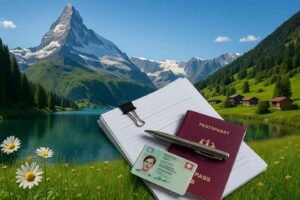 Documents & Requirements to Open a Swiss Bank Account (2025 Updated)
Let’s talk logistics. One of the first things I struggled with when opening my account in Switzerland was figuring out the paperwork. It wasn’t always clear which documents were essential, which ones were optional, and how strict each bank would be.
Now that I’ve opened multiple accounts (first with PostFinance, later with Neon), I’ve seen how different banks approach it. Let me break it down for you, based on 2025 standards and real-life experience.
Basic Documents You’ll Need (Regardless of Bank)
Whether you’re applying online or in person, these are the must-have documents almost every bank in Switzerland asks for:
- Valid Passport or National ID
- Has to be current and in good condition
- Some banks may also accept a Swiss driving license, but your passport is the safest bet
- Swiss Residence Permit (L, B, C, G, etc.)
- This is non-negotiable if you’re a resident
- If you’re still waiting for your permit, ask for a temporary letter from the migration office. PostFinance accepted mine when my permit card was delayed
- Proof of Swiss Address
- This one confused me at first. Your address must be current and local.
- I used my rental contract, but other options include:
→Utility bills (within the last 3 months)
→A certificate of residence from your Gemeinde (local commune office)
→A registration confirmation from your city hall
- Proof of Income or Employment (Optional, but often helpful)
- Some banks ask for this upfront, especially UBS or Credit Suisse
- I gave them my employment contract, but freelancers or students can often get by with a university letter or business registration
What If You’re a Foreigner or New Arrival?
When I first arrived in Switzerland, I didn’t yet have my residence permit or a utility bill. Here’s what I did:
- Step 1: I asked my landlord for a written confirmation of my move-in date
- Step 2: I took that and my rental agreement to the local city hall to get a temporary Wohnsitzbestätigung (residency confirmation)
- Step 3: That paper, along with my passport, was accepted by PostFinance for the initial account setup
Pro tip: Smaller or digital banks (like Neon or Zak) tend to be more flexible with new arrivals! They often don’t require proof of income, just a valid ID and address.
What If You’re a Non-Resident?
If you’re not living in Switzerland but still want to open an account here, for example, to hold Swiss francs or manage property, you’ll need:
- A strong justification (e.g., Swiss business ties, property ownership)
- Proof of foreign address and identity
- Additional compliance checks (anti-money laundering, tax compliance, etc.)
Keep in mind:
- Some banks don’t accept non-resident clients anymore in 2025, or require CHF 100,000+ deposits
- Your best option may be a private bank or an international banking specialist
- Expect higher maintenance fees and more documentation
Quick Checklist: What You Should Prepare
| Document | Required? | Notes |
| Passport or national ID | Yes | Must be valid |
| Swiss residence permit | Yes (if resident) | L, B, C, G accepted |
| Proof of address | Yes | Rental contract, utility bill, or city hall document |
| Proof of income | Sometimes | Especially for traditional banks |
| Reason for account (non-residents) | Yes | May be requested during a compliance check |
Having all your documents ready saves time and stress. I remember going back and forth to my local branch three times because I missed a small but important paper. Don’t be like me, check twice, go once.
 Best Banks in Switzerland (Compared)
Switzerland has a reputation for world-class banking, aaaaabut when you're living here day to day, what really matters is:
Which bank is actually the best for you?
Having personally opened accounts at both traditional banks (like PostFinance) and newer digital ones (like Neon), I can tell you there’s no “one-size-fits-all” answer. It depends on your lifestyle, needs, and even how comfortable you are with technology.
Let me break down the most popular options in 2025, the banks real people like us actually use, and help you figure out which one suits you best.
Quick Comparison Table: Swiss Bank Accounts in 2025
| Bank | Type | Monthly Fee | Best For | My Personal Verdict |
| PostFinance | Traditional | CHF 5 (free for young adults/students) | New arrivals, stability | Most foreigner-friendly, easy to start with |
| UBS | Traditional | CHF 10+ | Professionals, long-term expats | Solid but pricey, great customer service |
| Credit Suisse (Now CS by UBS) | Traditional | CHF 12+ | High-income, wealth clients | Strong legacy, but not expat-focused |
| Raiffeisen | Cooperative | CHF 3–10 | Families, rural residents | Community-focused, but less digital |
| Neon | Digital | Free | Students, freelancers, tech-savvy | My favorite for simplicity and cost-saving |
| Zak (by Bank Cler) | Digital | Free | Mobile users, minimalists | Good features, less flexible than Neon |
| Yuh (by PostFinance & Swissquote) | Digital | Free | Investors, savers | Hybrid app with solid investment tools |
My Real-Life Experience with Swiss Banks
Let me give you some personal insight:
PostFinance
My first bank in Switzerland - and honestly, it made settling in a lot easier.
Why I chose it: They accepted me with just my passport, rental agreement, and residence permit—even before I had a job.
Great for: Expats, students, or anyone new to the country
Watch out: Basic account has a small fee (CHF 5/month), but it’s waived if you're under 26 or a student
Personal Tip: Their mobile app isn’t fancy, but it gets the job done. I loved the free debit card and reliable bill payments.
Neon
After a year, I opened a Neon account, and it completely changed how I bank.
Why I switched: It’s 100% free, fast, and runs entirely on your phone
Great for: Tech-savvy users, freelancers, people who travel
Watch out: No physical branches, and cash deposits are limited
Personal Tip: I use Neon for everyday spending, and PostFinance for bigger payments like rent. That combo has worked perfectly for me.
UBS
- I briefly tested UBS when I was considering a mortgage.
- Top-notch customer service, physical branches everywhere
- High fees unless you meet certain criteria or have investments with them
My take: If you’re earning well and want a premium experience, go for it, but it's not ideal if you’re watching your budget
Zak & Yuh
I tried both briefly.
- Zak: Simple UI, built by a real bank (Cler), and good for those who want to stick with Swiss-only solutions
- Yuh: A fun hybrid, it's a spending + saving + investing app in one, great if you're interested in digital wealth building
My advice: Try them if you're curious, but Neon still beats them on day-to-day practicality
Which Bank Is Right for You?
Here’s a quick cheat sheet based on your situation:
- Student or under 25? → PostFinance or Neon (free accounts, easy setup)
- Freelancer or digital nomad? → Neon (low fees, flexibility)
- Family or long-term resident? → UBS or Raiffeisen (support, branches, loans)
- Non-resident or high net worth? → UBS / CS (if they accept you, prepare for extra checks)
- Want a bank on your phone? → Neon, Zak, or Yuh
My Personal Recommendation (Quick Verdict)
If I had to choose just one account to start with in Switzerland today, I’d go with:
PostFinance for stability and ease as a new arrival
Neon for day-to-day use, freedom from fees, and full mobile control
Combo strategy? That’s what I use and it’s worked brilliantly.
Can Non-Residents Open a Bank Account in Switzerland?
This is one of the most asked and misunderstood questions I get: Can I open a Swiss bank account if I don’t live in Switzerland?
The short answer?
Yes, it’s still possible in 2025, but it’s not easy and definitely not for everyone.
Let me walk you through what I’ve learned from personal research, helping friends, and a few real-life cases.
Meet Alex: A Freelancer from Spain
A friend of mine, Alex, is a remote worker based in Barcelona. He wanted a Swiss account to hold CHF, reduce currency risk, and eventually move to Switzerland part-time.
He thought opening an account would be simple, after all, it’s just a bank account, right?
Wrong.
Three banks rejected his application right away. Others required:
- Proof of strong ties to Switzerland (like property, job contracts, or family)
- A minimum deposit of CHF 100,000+ (yes, really)
- In-person visits and enhanced identity checks are required due to Swiss anti-money laundering laws
Eventually, he succeeded but only after working with a private wealth manager who helped open an account with a boutique private bank in Zurich. But the setup fee alone was CHF 500, with annual maintenance fees on top.
That experience taught me a lot about the current system. Here's what you need to know.
Rules for Non-Residents (2025 Update)
Switzerland has tightened rules in recent years due to global transparency laws and pressure to combat tax evasion. Today, non-residents must meet stricter standards.
What most banks require:
- Valid passport
- Verified foreign address
- Clear explanation of why you need a Swiss account (e.g., investment, real estate, Swiss employer)
- In some cases, proof of wealth or income sources
- Willingness to physically visit a branch (most do not allow remote setup)
Which Banks Might Accept Non-Residents?
| Bank | Accepts Non-Residents? | Notes |
| UBS | With a high minimum balance (CHF 100k+) | Best for wealth clients |
| Credit Suisse (CS) | Similar to UBS, stricter screening | For high-net-worth only |
| PostFinance | No longer accepts non-residents | It was once an option |
| Neon / Zak / Yuh | Only available to Swiss residents | Digital-only, no non-resident pathway |
| Private Banks | Yes, case-by-case | Requires financial justification and higher costs |
Common Mistakes to Avoid
- Thinking digital banks will work for you: Most are geo-restricted. Neon, for example, requires a Swiss mobile number and address.
- Skipping compliance checks: Swiss banks will report to foreign tax authorities if needed.
- Assuming all Swiss banks are like offshore tax havens: Those days are long gone. Expect transparency and regulation.
My Honest Advice
If you’re a non-resident and you:
- Have legitimate financial ties to Switzerland (work, property, legal presence)
- Are you prepared for extra paperwork and costs?
- Can travel to Switzerland in person if required
… then yes, it’s possible. But if you’re just looking for a “safe place to park money” anonymously, you’ll hit a wall.
If you're serious about opening an account, your best bet is to contact a private bank directly or go through a licensed financial advisor in Switzerland.
How to Open a Swiss Bank Account Online (Step-by-Step)
Let’s make this super clear:
Yes, in 2025, you can absolutely open a Swiss bank account online - easily, securely, and without stepping into a bank.
I’ve done it twice — once with Neon and once with Zak. Both took less than 30 minutes, but only after I had all my documents ready (learned that the hard way the first time).
Let’s walk through the full process, step by step - with personal notes to guide you.
Step-by-Step: Open a Swiss Bank Account Online in 2025
Step 1: Choose the Right Bank
Pick a bank that suits your needs (see Section 4!). For online opening, I recommend:
- Neon (100% mobile and free)
- Zak (also mobile-based, with saving features)
- Yuh (great for investing & saving in multiple currencies)
I personally love Neon for its clean app and no fees - more on that below.
Step 2: Download the App
Go to the App Store or Google Play, search for the bank (e.g., “Neon Switzerland”), and download the official app.
Tip: Make sure your phone region is set to Switzerland and you have a Swiss SIM card, especially for SMS verification.
Step 3: Create Your Account
Open the app and hit “Open Account”. You’ll be asked to:
- Enter your full name, date of birth, and email
- Create a secure password
- Verify your phone number (SMS code)
When I did this with Neon, the onboarding flow was very smooth - I didn’t even need a computer.
Step 4: Upload Your Documents
Be ready to upload (or take pictures of):
- Passport or ID
- Swiss address proof (rental contract, utility bill, etc.)
- Residence permit (L, B, C) – a scanned copy is enough
I used my B-permit and a PDF of my rental contract - both were accepted in minutes.
Step 5: Video Identification (Quick but Important)
This is the most crucial part and where I got stuck the first time.
A staff member (or automated system) will start a quick video call:
- Show your face clearly
- Hold up your ID next to your face
- Follow prompts (e.g., move your head, say your name, etc.)
Tip: Do this in a quiet, well-lit room with a strong Wi-Fi connection.
I had to redo mine because my lighting was bad, and the camera couldn’t scan my passport clearly.
Step 6: Wait for Confirmation
After ID verification, the app will confirm everything’s been submitted.
Approval usually takes:
- 24-48 hours for Neon/Zak
- A few hours for some (mine was approved the next morning!)
You’ll then receive:
- Your IBAN/account number
- A physical debit card by mail (usually within 5–7 business days)
My Experience (The Good and The Learning Curve)
When I first opened my Neon account, I assumed I could just upload my passport and be done.
I wasn’t prepared for the video ID call, and the low camera quality on my old phone caused a delay.
After switching to better lighting and restarting the ID process, it went through smoothly.
Now? I use that account for everything: rent payments, shopping, even international transfers.
Summary: Opening a Swiss Account Online
| Step | Action |
| 1 | Pick a bank (Neon, Zak, Yuh) |
| 2 | Download app |
| 3 | Enter personal details |
| 4 | Upload ID + address documents |
| 5 | Complete video ID check |
| 6 | Wait for account approval |
That’s it! It’s safe, legal, and becoming the new normal in Switzerland, especially among younger residents, expats, and freelancers.
Fees, Costs & Money-Saving Tips
Let me tell you the truth:
Banking in Switzerland isn’t free - even if it feels like it should be.
Whether you're new here or have lived in Switzerland for years, hidden fees can quietly drain your money. I’ve been caught off-guard a few times, and I want to make sure you don't have to learn the hard way.
Common Hidden Fees in Swiss Bank Accounts
Here’s what you’ll want to watch for even at so-called "free" banks:
| Fee Type | What It Means | Watch Out For |
| Monthly Account Fees | Charged just for having an account | Some charge CHF 5–12/month unless you meet conditions |
| Foreign Currency Transactions | Every time you spend abroad or in a non-CHF currency | Can add 1.5–2.5% to your costs silently |
| ATM Withdrawal Fees | Especially from other bank ATMs | Up to CHF 2–5 per withdrawal |
| Card Replacement Fees | Lost card? Replacement can cost CHF 20+ | |
| Inactivity Fees | Some banks charge if your account is dormant | |
| SEPA or International Transfers | Fees vary widely by bank and destination |
I once paid over CHF 60 in hidden currency fees after a short trip to France — I didn’t realize my debit card was converting at a horrible exchange rate. I now use Neon for travel, which has no FX markup!
How to Avoid or Reduce Banking Fees
Here’s what I personally do now to keep my banking nearly free:
1. Use Neon for Everyday Spending
- No monthly fee, no FX markup on foreign payments
- Perfect if you shop online or travel outside Switzerland:
Neon Fee Overview Tool (Official)
2. Keep a Minimal Balance in Traditional Banks
- PostFinance or UBS may waive fees if you maintain a certain balance or receive regular income
I keep just enough in my PostFinance account to pay rent and health insurance — everything else runs through Neon.
3. Avoid ATM Fees
- Use your own bank’s ATMs when possible
- Withdraw once a month in a larger amount instead of frequent small amounts
4. Watch Out for Foreign Currency Traps
- Always choose to be charged in local currency when abroad - never in CHF
The dynamic currency conversion option (CHF instead of local currency) is a total rip-off.
Tools to Help You Compare Fees
Final Word from Me
It’s incredibly easy to let CHF 5 here, CHF 2 there quietly disappear from your account.
But over a year? That could be CHF 150–300 gone.
By being intentional and switching to smarter tools, I’ve saved over CHF 400 in a year.
And I promise once you set it up right, you’ll feel more in control of your money here.
Is Swiss Banking Safe? (Trust & Security)
When I first moved to Switzerland, one of my top concerns was:
Can I really trust Swiss banks with my money and data?
Now that I’ve been banking here for years, my answer is a solid yes - and here’s why.
Switzerland = Global Gold Standard for Banking Safety
Switzerland has long been seen as one of the safest and most stable financial systems in the world, and that’s not just a myth. Here’s what makes it so secure:
Strong Banking Secrecy & Data Protection
- Swiss law protects customer privacy under Banking Law Article 47, which makes it illegal for banks to disclose personal financial info without consent or a legal order.
- Data is encrypted and stored under strict security protocols. Most servers are located within Switzerland itself.
Personally, I sleep well at night knowing my information isn’t being sold or shared with random third parties, like I’ve experienced with some banks abroad.
Government Deposit Protection
- If a Swiss bank were to collapse (rare, but possible), the government guarantees up to CHF 100,000 per person per bank.
- This guarantee is backed by Esisuisse, Switzerland’s official deposit insurance scheme.
Learn more about Esisuisse
This was the final factor that convinced me to move most of my savings into a Swiss account I knew my money had a safety net.
Mobile Banking = Just as Safe (If Not Safer)
I use mobile banking apps like Neon and Zak, and they come with:
- Two-factor authentication (2FA)
- Biometric login (Face ID or fingerprint)
- Instant alerts for every transaction
- Advanced fraud detection systems
I’ve never had a single case of unauthorized access or weird charges. But I do regularly update passwords and check transactions, basic online hygiene!
My Honest Comfort Level
From using big banks like PostFinance to modern mobile ones like Yuh, I’ve always felt that Swiss banks take safety seriously.
And here’s the big difference I’ve noticed:
In Switzerland, security is not just a feature! It’s a culture. You’ll see it in how banks interact with customers, how strict they are with ID checks, and even how seriously they take small fraud flags.
If you're considering banking in Switzerland and wondering about safety, you’re in good hands.
Your data is protected. Your money is insured. And the entire system is built on stability, privacy, and trust.
My Personal Recommendations & Tips
If you’re feeling overwhelmed by all the banks, fees, apps, and paperwork, believe me, you’re not alone.
When I first tried to open a bank account in Switzerland, I thought, “I’ll just walk into a bank, show my passport, and be done in an hour. Wrong!
The reality was slower, more expensive, and filled with tiny details no one tells you until you live through it.
That’s why I want to share what I’ve learned, what I’d do differently, and how you can avoid the same headaches.
What Worked Best for Me
After trying three different banks (PostFinance, Neon, and Yuh), here’s what I personally recommend:
Everyday Banking: Neon
- No monthly fees
- Free card + free SEPA transfers
- Easy mobile app and no-nonsense
I use Neon for all my daily spending, grocery shopping, online orders, and subscriptions. The app gives instant notifications, and I love that I don’t need to worry about surprise fees.
Big Bill Payments & Rent: PostFinance
- Good for structured Swiss bills (like QR invoices)
- More accepted by landlords, health insurers, etc.
I don’t love the CHF 5/month fee, but I’ve kept it because it's still widely accepted by government services and housing companies.
International Use / Currency Savings: Yuh
- Let's you hold multiple currencies
- Easy to invest and save money long-term
- Great if you travel often or send money abroad
My Mistake: Chasing Perks Without Reading the Fine Print
Early on, I picked a fancy account with a bonus but I didn’t realize:
- It had a CHF 12 monthly fee
- The bonus expired after 3 months
- I was locked into a package I didn’t actually need
Lesson learned: If it looks too good to be true, it probably is. Always ask for a detailed fee breakdown, and compare it to your actual usage habits.
If I Were Starting Over in 2025…
Here’s exactly what I’d do:
- Download Neon first get your free account rolling in 15 minutes
- Open a second account with PostFinance only if you need to pay rent or get paid by a Swiss employer
- Use Wise or Revolut alongside your Swiss account for low-fee international transfers
- Track your banking costs for 3 months to see where you’re losing money
- Don’t sign up for packages you don’t need Simplicity wins in Switzerland
Final Thought
Swiss banking can feel complex, but once you find the right fit, life becomes much easier.
Having the right account saved me hundreds of francs in fees, countless hours of frustration, and honestly… it gave me peace of mind knowing my money was safe, accessible, and under control.
So if you're standing at the beginning of your Swiss journey, whether you're moving, visiting, or simply curious, my advice is simple:
Start smart. Stay curious. Keep it simple.
Final Thoughts + What to Do Next
If you’ve made it this far, first of all, thank you.
I truly hope this guide has made you feel more informed, more confident, and more prepared to open your bank account in Switzerland.
I know how overwhelming it can feel at first. New country, new rules, and so many banks promising “the best offer.” But with the right information (and a little patience), it doesn’t have to be hard.
Whether you're a new resident, a student, a digital nomad, or just planning ahead, the goal of Swiss Sustain is to help you live smarter and smoother in Switzerland.
What’s Next?
Pick the bank that fits your life.
Use the step-by-step guide above to open your account online.
Bookmark this article, you’ll probably need it again.
Need help or have a question?
I’d love to hear from you!
Whether you're stuck on paperwork, unsure which bank is right for you, or just want a second opinion, feel free to contact me here. I reply personally.
Also, check out my other guides:
https://swisssustain.com/what-language-is-spoken-in-switzerland/
Cost of Living in Switzerland (2025 Guide)
What is the Fastest Way to Become a Swiss Citizen – Step-by-Step
You’ve got this.
And if you ever feel stuck, remember I’ve been there too.
You're not alone on this journey.
Until next time,
Swiss Sustain

Best Places for Honeymoon in Switzerland | Our Top Picks
Let me start with something personal. I honestly didn't think much of Switzerland when I first planned my honeymoon there. Sure, I’d seen the Instagram-perfect photos of snow-capped peaks and quaint lakeside towns, but live there? It’s a completely different world. Switzerland isn’t only beautiful, it’s peaceful, it’s organized, it’s romantic, and it’s way too easy to fall in love with (and in).
From sipping hot chocolate in a wood-heated chalet in Zermatt to watching the sunset over Lake Geneva with my partner, everything felt cinematic. But, I’ll be honest: Planning it wasn’t a bed of roses. It’s expensive, and it can be very overwhelming with all the choices: where to go, how to get around, when to go, and how to not go broke in one of the world’s most expensive countries.
To enjoy every moment romantically, you should definitely know about the best honeymoon places in Switzerland. And that’s precisely the reason I’m writing this guide. Not only to share the dreamy highlights but to walk you through the full experience, including the magical moments and the things I wish I’d known in advance.
Whether a couple living in Switzerland is seeking a local romantic getaway or coming from abroad to plan a honeymoon, this guide is meant for you. I’ve made it super easy for you to see the best destinations, the can’t-miss experiences, smart travel tips, and more, including what to avoid (because yes, not every scenic town welcomes honeymooners with open arms).
This is not a list. It’s like a chat, a bunch of memories, personal and loving advice to guide you through this most decidedly romantic country.
Let’s begin.
 Top Honeymoon Destinations in Switzerland
1. Zermatt & The Matterhorn – For a Classic Alpine Escape
Zermatt was the first of our honeymoon stops, and I can still conjure the complete silence no cars, just the crunch of snow under our feet, and the view of the Matterhorn, standing like a painting. If you’re part of a couple who love dramatic views, skiing, or simply snuggling up next to the fireplace with a mountain view, Zermatt is truly magical.
What to do:
- Consider the Gornergrat Railway, a scenic train journey with views of the Alps.
- Ski or snowboard (or sit back with a cup of hot wine while others do).
- Have lunch at Chez Vrony, a romantic mountaintop restaurant.
- Reserve Time: A private spa session at the Backstage Hotel Vernissage.
Where to stay:
Stay CERVO Mountain Resort: Stylish, romantic, and sustainable.
Personal tip: Don’t show up with large suitcases. Zermatt is car-free, and you’ll need to walk or take an electric taxi to your hotel.
Advantage: The pinnacle of peace, luxury, and mountain romance.
Advantage: It’s a little on the expensive side! Not great for a very short honeymoon, as it’s a bit remote.
2. Lucerne & Lake Lucerne – For Fairytale Romance
Lucerne was as if you were walking into a postcard. It’s the perfect mix of old-world charm and lakeside tranquillity. Holding hands and walking across the Chapel Bridge the one covered in swans swimming beneath and the most perfectly framed mountain vista behind it was one of those moments I wish I could bottle.
What to do:
- Embark on a sunset cruise on Lake Lucerne
- Take the steepest cogwheel railway in the world, the Pilatus Railway, up Mount Pilatus
- Riverside cafés and the Old Town
- In warmer months, rent a rowboat or paddleboat.
Where to stay:
Hotel des Balances – A romantic place to stay, with lake views and an old town location.
Personal tip: Visit in late spring or early autumn to avoid the crowds and yet have the lake in all its glory.
Advantage: Easy to walk, romantic, and packed with fun things to do.
Disadvantage: Can be crowded at the height of summer; lakefront dining can be costly.
3. Lauterbrunnen & the Jungfrau Region – For Nature Lovers & Dreamers
Lauterbrunnen is as close as you can get to what heaven would look like if it were chiselled into a valley. Waterfalls tumbling off cliffs, wooden chalets blossoming with flower boxes, and the never-ending sound of cowbells, it’s the sort of place that makes you slow down and savour the simple pleasure of being together.
What to do:
- Stay in Lauterbrunnen & day trip to Wengen, Mürren, Grindelwald, etc
- Take the Jungfraujoch train to the Top of Europe
- Picnic at the base of Staubbach Falls
- Take the Panorama Trail for stunning vistas.
Where to stay:
Hotel Silberhorn or an Airbnb chalet in Wengen or Mürren for placid romance.
Personal tip: Travel light and dress in layers! The weather changes fast in the Alps, even in summer.
Advantage: Stunning natural beauty, and adventure with a side of tranquillity.
Disadvantage: Nightlife is limited; not great for couples seeking city buzz.
4. Montreux & Lake Geneva – For Sophisticated Romance
Montreux gave us that refined, lakeside honeymoon vibe something about the palm-fringed promenade, vineyards on the hill, and relaxed French-Swiss atmosphere that felt indulgent and relaxing. It's the spot for wine lovers and anybody who likes a slower pace.
What to do:
- See Chillon Castle (at the lake’s edge)
- Ride the scenic Lavaux wine train through vines listed by UNESCO
- Eat by the lake with Franc…
- Discover Vevey, the peaceful yet romantic town next door
Where to stay:
Fairmont Le Montreux Palace – Traditional luxury and spa choices.
Personal tip: If you’re a jazz fanatic, schedule your visit during the Montreux Jazz Festival (July), amazing vibe, even if you don’t consider yourself a major jazzhead.
Advantage: Trendy, artsy, and culture-rich.
Disadvantage: Less snowy in winter; not as much of an “Alps” feel.
5. Interlaken – For Adventure Couples
Interlaken surprised me. I arrived expecting a tourist megalopolis; instead, I discovered a launching pad for adventure and beauty that is well suited to a couple who longs for more than mere relaxation. From paragliding to chocolate-making classes, it has a little of everything.
What to do:
- Try tandem paragliding over Lake Thun
- Take a boat ride across Lake Brienz
- Ride the Harder Kulm funicular for scenic dining. encoder For dinner with a view, take the Harder Kulm funicular
- Book a Swiss chocolate workshop as a cute couple activity
Where to stay:
Victoria Jungfrau Grand Hotel – Luxury, spa, and mountains.
Personal tip: Don’t overstay your time here, just plan to use it as a 2–3 day hub or springboard to Lauterbrunnen or Grindelwald.
Advantage: Central with lots to do
Downside: Can be touristy, especially in high season
6. St. Moritz – For Luxury and Winter Glamour
If it’s that James Bond meets a winter honeymoon vibe you’re chasing, St. Moritz has it covered. We only spent a weekend there, but it felt like entering a different world frozen lakes, horse-drawn sleigh rides, and some of the best spa treatments I have ever had.
What to do:
- Go ice skating on the frozen lake (in winter)
- Take the Bernina Express train through stunning alpine landscapes
- Enjoy luxury shopping and fine dining
- Book a ‘couples’ treatment at Kulm Hotel Spa
Where to stay:
Badrutt’s Palace Hotel – A storybook in the snow.
Protip: It’s an extravagant spot. Budget meticulously and book ahead, especially during the winter.
Advantage: World-class luxury, exclusive atmosphere
Disadvantage: Pricey and less intimate than some smaller communities
7. Zurich – For Urban Romance & Cultural Comfort
So we wrapped up our honeymoon with a stay in Zurich, and it was the best way to get back into city life. If you’re a couple that digs art museums, river walks, and cozy coffee shops, Zurich manages to provide all that chic, urban European romance.
What to do:
- Visit Kunsthaus Zurich (Art Museum)
- Enjoy a boat trip on Lake Zurich with your loved one
- Take a walk around Old Town (Altstadt)
- Visit Thermalbad & Spa Zurich – rooftop pool with city views
Where to stay:
Widder Hotel – A historic little romantic hotel in the centre of town
Personal tip: Zurich is an excellent place to start or end this itinerary. Try to avoid Sunday most shops and restaurants are closed.
Advantage: Modern conveniences, airport access. The room was cleaned and had a fridge
Disadvantage: Missing the private honeymoon vibe
8. Ticino – For a Warm, Mediterranean Feel
Ticino does not feel like regular Switzerland, it’s warm, Italian-speaking, and full of palm trees, lakes, and gelato shops. We discovered it at the end of our trip and love the fact that it’s Italian Swiss fusion.
What to do:
- Explore the town of Lugano and its lakeside promenades
- Visit Bellinzona’s castles.
- Enjoy pizza and pasta by the lake with a bottle of Ticino Merlo.t
- Hike or take a funicular up Monte Brè or Monte San Salvatore
Where to stay:
Villa Principe Leopoldo – History and lake views.
Personal tip: Great for spring or fall, but not so hot if it’s cold and dead (no restaurant open).
Advantage: Romance, Warmth, Italian Food, Italian Way of Life
Disadvantage: Lesser known, fewer English signs or guides
 Most Romantic Experiences in Switzerland
Switzerland is not just about beautiful places, it’s about the memorable moments you have there. Here are some of the most romantic experiences I had (or wish I had known about sooner) that really did bring warmth, laughter, and connection to our honeymoon. For those of you who are couples who enjoy quiet time together or exploring something new, these ideas will make your trip feel extra special.
1. Ride the Glacier Express – A Window to Romance
I’ll never forget this: sitting beside my partner on the Glacier Express, watching the world slowly change from icy mountain passes to sunlit valleys, all from a panoramic window. It’s not just a train ride it’s an 8-hour love letter to Switzerland.
Seating is plush; meals are delivered to your seat! And you can raise a glass of Swiss wine while traversing 91 tunnels and 291 bridges. It’s slow travel at its best, and how we can best be present with each other.
Personal tip: If you can afford it, book the Excellence Class. It’s expensive, yes, but absolutely unforgettable.
2. Lake Cruises at Sunset – Lucerne, Geneva & Lugano
There’s something indescribable about being on a boat as the sun sets behind the mountains. We went on a sunset cruise on Lake Lucerne, and the scene was surreal: pastel skies, shimmering waters, and a warm breeze in our hair.
You can also cruise Lake Geneva for vineyard views or Lake Lugano for a Mediterranean feel. Most of the boats have food and drinks, so it’s also great for a honeymoon date night.
Best tip: Sit on the breezy top deck, bring a sweater (even in the summer), and go just before sunset.
3. Thermal Spas in the Alps – Pure Indulgence
And after a few days of hiking or sightseeing, there is nothing better than soaking in a mountaintop spa. We booked a couple’s session at Leukerbad Therme, where you can float in a heated outdoor pool with snowy peaks all around you.
Another great option is Thermalbad & Spa Zurich, where you can take a dip in a rooftop infinity pool in a converted brewery. This is romantic, it’s cozy, and it feels particularly Swiss.
What not to do: Don’t assume you don’t need to book in advance for a room or for a spa; don’t wing it. Also, note that most spas in Switzerland are mixed-gender and | or naked (in the sauna area). I’m just saying!
4. Wine Tasting in Lavaux Vineyards
This was a delightful gem of a find, completely unexpected. We visited the Lavaux area, whose terraced vineyards tumble down into Lake Geneva. It is local, fresh, and not widely distributed, so it feels like a secret that only a few people get to taste.
Walking hand in hand through the vines, with the sun dipping over the lake and a glass of Pinot Noir or Chasselas to hand... could it get any more romantic?
Tip: Hop on the little Lavaux Panoramic Train or take a guided walk with tastings. It’s a beautiful thing to slow down and connect in that way.
5. Winter Strolls & Hot Chocolate Moments
Don’t discount the poetic possibilities of a snowy walk in winter. Swiss towns Grindelwald, Zermatt, or almost anywhere in Appenzell turn into silent, storybook worlds when snow falls. We dressed warmly, took slow walks beneath the glowing orange streetlights, and ended the night with Swiss hot chocolate by a fire.
It doesn’t need to be fancy. The most romantic moments are often as simple as being still together but in the right place.
Bonus: Plan a Surprise or Small Gesture
One thing I did: I secretly arranged a private fondue dinner in a tiny alpine hut near Lucerne. Candles, cheese, wine, the two of us. You don’t need to do anything major, but a small but thoughtful gesture can make the entire trip.
Personal Tips & Planning Advice
So, having explored where to go and what to do, now let’s talk about real-life honeymoon planning, the kind of advice that I really wish someone had offered me before we booked anything.
The following tips go straight from experience into your toolkit, a catalogue that details a few grains of wisdom, a pinch of what not to do, and all of the real-life lessons that ensure your Swiss honeymoon is smooth, affordable, and meaningful from the get-go.
1. Choose Your Season Wisely – It Makes All the Difference
Switzerland is a different place with each season, and so is your honeymoon vibe:
- SUMMER (JUNE-AUGUST): Best for hiking, lake cruises, and wine tastings. More hours of daylight, more festivals, and livelier towns.
- Fall (September-October): Best in my opinion foliage, fewer tourists, and grape harvest.
- Winter (December–February): If you like snow, skiing, and snuggling in mountain lodges, it’s a magical time. Christmas markets = pure romance.
- Spring (April-May): This period offers a lull in a quiet beauty with meadows in full bloom, yet prices are a little lower, but mountain passes can still be closed.
Personal Note: We opted for late September, the absolute sweet spot between weather, sentiment, and tranquillity.
2. Pack Smart, Not Overboard
Don’t overpack. Most Swiss towns are walkable, or car-free (like Zermatt), and it’s no fun to lug heavy bags on cobblestone streets or on wee mountain trains.
Bring:
At least one nice pair of tennis shoes that are waterproof
- A warm enough jacket (yes, even in the summer, it cools down at night)
- Lightweight day backpack
- I want something nice but also comfy dinners
Bonus tip: Save room for Swiss chocolate, local wine, and a handmade souvenir or two.
3. Swiss Travel Pass = Honeymoon Hero
If you’re going to visit more than a couple of cities (and I highly recommend it), the Swiss Travel Pass is a major game-changer. It covers:
- Trains, boats, buses, and the odd mountain top drive.
- Entry to 500+ museums
- Savings on scenic trains, e.g., the Glacier Express
In the end, we saved over CHF 400 by using the pass, and that meant everything was easier. No ticket lines, no stress.
4. Mind Your Budget! Switzerland Is Expensive
Let’s face it: Switzerland isn’t exactly cheap. You have to plan smart, but it is totally worth it.
What worked for us:
- Combine luxury hotels with quaint mid-range Airbnbs
- Eat one meal out a day, but snacks or local groceries for the others
- Opt for picnic spots in place of restaurants for lunch
- Select 1-2 luxury experiences (a spa or a glacier train) and mix them in with free hikes or lake swims
What NOT to do: Do not make “save money” the central plan for everything. You’re on your honeymoon, and it’s okay to splurge just a little where it counts.
5. Slow Down, Be Present
This might be the top tip of all. You certainly don’t have to look at everything. You don’t have to tick each one of the boxes. Some of our most loved memories happened not in a guidebook way, but in the lull, the leisurely morning, the left turn.
Let romance breathe. Don’t overplan. Believe me, Switzerland will take it from there.
 Sample Itineraries in Switzerland
Deciding to go on a honeymoon in Switzerland can be daunting: there is so much beauty everywhere. But the good news is you don’t have to experience it all to have a great time.
To assist, I’ve drawn up two sample itineraries from my own experience one for a brief, care-erasing couple’s getaway, and one for a more relaxed and in-depth honeymoon. These are meant to be fairly breezy, with a mix of adventure and relaxation, and romance packed in without feeling too rushed.
3–5 Day Romantic Escape
Great honeymoon romance package is for couples who have little time and want to get away on a fairytale honeymoon.
Day 1: Lucerne
- Zurich to Lucerne (1 hr by train). Pick up at Zurich airport and proceed to Lucerne.
- Check out Old Town & have a romantic lakeside dinner
- Stay the night at Hotel des Balances
2: Lake Lucerne & Mount Pilatus
- Hop on a cruise on the lake and the cogwheel railway up to Mount Pilatus
- Spa night or chill fondue night
3: Lauterbrunnen or Lauterbrunnen to Interlaken
- Hop a train to Lauterbrunnen (2 hrs)
- Waterfall, picnic, and quiet mountain dinner walk
- Overnight in a chalet or mountain-view hotel
(Optional Days 4–5)
- Day walk through Mürren or visit Jungfraujoch.
- Return to Zurich for 1 night + spa + shopping.
Why it works: It’s compact, but rife with romance, scenery, and ease of travel.
7–10 Day Honeymoon Itinerary
Best for Couples looking for the complete Swiss experience, from lakes to Alps to luxury.
1–2: Zurich → Lucerne
- Arrive in Zurich, proceed to Lucerne
- Cruise on the lake, Pilatus, Old town
3–5: Lauterbrunnen & Jungfrau Region
- Stay in Wengen or Mürren
- Spend the day at Jungfraujoch, hike to Gimmelwald, quiet mountain dinners
6–7: Zermatt
- Glacier Express to Zermatt
- Panoramic railway, spa, and romantic meals with views of the Matterhorn
8–10: Montreux or Lake Geneva Region
- Wine tasting in Lavaux
- Explore Chillon Castle and finish with dinner by the lake
- Drive back to Zurich for onward departure.
Why it works: This route combines city, nature, and culture, all with a coating of romance.
Face-to-face conversation followed by the July camp is Customizable, depending on your season, interests, and budget. But don’t hesitate to trade a mountain village for a lakeside town! What matters is what resonates with you as a couple.
Final Thoughts
If you’ve read all the way through, I genuinely hope this guide has helped you dream plan, and feel inspired about your honeymoon in Switzerland. I didn’t just sit down and hammer this piece out as a result of the research I’ve written from real experiences, real moments of the heart, and lessons learned while altar-ing through this magical Laguna with someone to hold my hand.
Switzerland has a way of slowing you down and filling you up at the same time. Whether it’s a steaming glass of wine at the Lavaux vineyards, a blanket under the stars in Zermatt, or a quiet coffee in the mountains in the morning, these are the moments that last a lifetime.
My biggest piece of advice? Don’t overcomplicate it. Switzerland’s natural beauty will do the heavy lifting. Focus on being present, the romance will naturally happen.
Now it’s your turn:
That’s it! If this guide was helpful to you or if you have any questions, feel free to leave a comment or reach out. I would be delighted to help you plan the ultimate romantic getaway.
Ready to start planning?
Browse through my destination guides, travel advice, and packing lists on Swiss Sustain, your genuine guide for life and travelling in Switzerland.
Here’s to a honeymoon you will never forget.
If you found this honeymoon guide helpful, here are three more articles you should definitely check out next:
Cheapest Way to Travel in Switzerland – Budget-friendly travel tips perfect for couples exploring together.
Best Hotels in Interlaken – Romantic stays with mountain views and cozy vibes.
What Language Is Spoken in Switzerland? – Speak the local language of love, or at least understand it better!